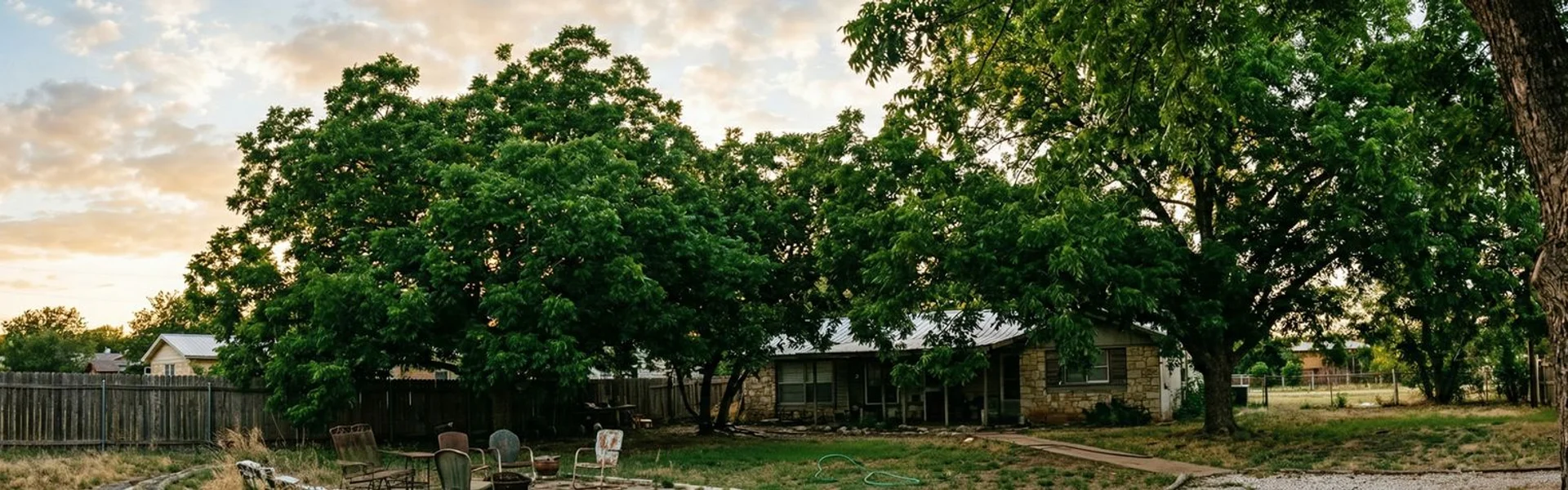
Deep Root Fertilization for West Texas Trees
Deep root fertilization services in San Angelo, TX. Targeted nutrient injection to strengthen trees in West Texas alkaline soils and help them recover from drought stress.
What's Included
- High-pressure liquid nutrient injection below the soil surface
- Custom nutrient blends for West Texas alkaline soils
- Iron and micronutrient supplements for chlorosis correction
- Mycorrhizal inoculants to enhance root absorption
- Drought recovery and stress reduction treatments
- Seasonal treatment programs for ongoing tree health
- Soil analysis and pH testing included
- Safe for all San Angelo tree species
Revitalize Your Trees with Deep Root Fertilization in San Angelo
Trees in San Angelo and the Concho Valley face a unique set of nutritional challenges that surface fertilizers simply cannot address. The alkaline caliche soils that dominate Tom Green County lock up essential nutrients like iron, manganese, and zinc, making them unavailable to tree roots even when they are technically present in the soil. Add chronic drought stress, intense summer heat, and compacted urban soils, and it is no surprise that many San Angelo trees show signs of decline despite their owners’ best intentions.
San Angelo Texas Tree Service Pros solves this problem with professional deep root fertilization, a targeted treatment that delivers custom-formulated liquid nutrients directly to the root zone where your tree can actually absorb them. This is not a generic lawn fertilizer scattered on the surface. It is arborist-prescribed nutrition engineered for the specific soil chemistry and species requirements of West Texas trees.
Why San Angelo Trees Need Deep Root Fertilization
The Alkaline Soil Problem
San Angelo sits on soils that range from moderately alkaline to extremely alkaline, with pH levels commonly between 7.5 and 8.5. At these pH levels, critical micronutrients become chemically bound to calcium carbonate in the caliche layer and are rendered unavailable to plant roots. Iron is the most commonly deficient nutrient, but manganese, zinc, and boron are also frequently inadequate.
The visible symptom of iron deficiency is interveinal chlorosis, a condition where leaf tissue turns yellow while the veins remain green. This is extremely common in San Angelo live oaks, pecans, and ornamental trees planted in undisturbed caliche soils. The tree is not missing iron because it was never there. The iron is in the soil but locked in a form the roots cannot access. Deep root fertilization with chelated iron compounds bypasses this lockout by delivering iron in a plant-available form directly to the feeder roots.
Drought and Heat Stress
San Angelo averages approximately 20 inches of rainfall per year, and much of that comes in unpredictable bursts separated by long dry periods. Summer temperatures exceed 100 degrees for weeks at a stretch. Under these conditions, trees deplete their stored nutrient reserves faster than they can replenish them from the impoverished soil. The result is a gradual decline in canopy density, leaf size, growth rate, and overall vigor.
Deep root fertilization replenishes these depleted reserves directly in the root zone. The high-pressure injection process also fractures compacted soil, creating channels that improve water infiltration and oxygen availability to the roots. This dual benefit of nutrition and soil decompaction makes deep root fertilization one of the most effective treatments available for drought-stressed trees in West Texas.
Urban Soil Compaction
Trees in San Angelo neighborhoods, commercial properties, and public spaces grow in soils that have been compacted by construction equipment, foot traffic, and vehicle parking. Compacted soils have reduced pore space, which limits root growth, water movement, and gas exchange. The fine-textured clay soils common in Tom Green County are especially susceptible to compaction.
When we inject fertilizer at high pressure, the liquid creates small fractures and channels in the compacted soil. Over time, these channels become pathways for root growth and natural soil organisms. The mycorrhizal inoculants we include in many of our formulations colonize these new root pathways and extend the tree’s nutrient-absorbing network far beyond what the roots could reach alone.
Our Treatment Process
Comprehensive Soil Testing
Before we inject a single gallon of fertilizer, we need to know what your soil contains and what it lacks. Our arborist collects soil samples from the root zone at multiple depths and sends them to a laboratory for analysis. The results tell us the soil pH, available nitrogen, phosphorus, potassium, calcium, magnesium, iron, manganese, zinc, boron, and organic matter content.
This data is essential because applying nutrients that are already abundant wastes money and can actually harm the tree by creating toxic concentrations or nutrient imbalances. San Angelo soils, for example, are typically very high in calcium and phosphorus but deficient in iron and zinc. A generic balanced fertilizer would add more of what is already excessive while providing too little of what is actually needed.
Custom Formulation
Based on the soil test results and the specific needs of your tree species, our arborist formulates a custom liquid nutrient blend. A typical formulation for a chlorotic live oak in San Angelo might include chelated iron, chelated manganese, slow-release nitrogen, humic acid to improve nutrient availability, and mycorrhizal fungi to enhance root absorption. A pecan tree on the same property might receive a different formulation with higher potassium and zinc to support nut production.
We use professional-grade fertilizer components, not consumer products diluted and repackaged. Our chelated iron formulations use EDDHA chelation, which remains stable and plant-available in soils with pH above 8.0 where cheaper DTPA and EDTA chelates break down and become ineffective.
High-Pressure Root Zone Injection
The injection process uses specialized equipment that pushes the liquid solution into the soil at approximately 150 to 200 PSI through a probe inserted 8 to 12 inches deep. We inject on a grid pattern across the entire root zone, which extends from near the trunk to well beyond the canopy dripline. For a large live oak with a 50-foot canopy spread, we may make 30 to 50 individual injection points to ensure thorough coverage.
Each injection delivers between one-half and one gallon of solution, depending on soil conditions and absorption rate. The total volume applied per tree ranges from 15 to 50 gallons. The process takes approximately 30 to 60 minutes per tree, and the treated area can be walked on and irrigated normally immediately afterward.
Seasonal Treatment Programs
Scheduling deep root fertilization before summer in West Texas gives trees the best chance to build reserves ahead of peak heat. For trees recovering from significant decline, a single treatment may not be sufficient. We offer seasonal treatment programs that provide fertilization in both spring and fall for one to two years until the tree reaches satisfactory health. After recovery, most trees transition to an annual maintenance program with a single treatment per year, typically in early spring.
Our arborist monitors your trees between treatments and adjusts formulations based on the tree’s response. If canopy density improves but leaf color remains pale, we may increase the chelated iron concentration. If growth is vigorous but pest pressure has increased, we may add systemic insecticide to the fall treatment. This adaptive approach ensures that every dollar you invest in fertilization produces visible results.
Trees That Benefit Most from Deep Root Fertilization
While all trees can benefit from proper nutrition, certain situations make deep root fertilization especially valuable in the San Angelo area:
Recently transplanted trees that are establishing in new soil benefit enormously from root zone fertilization with mycorrhizal inoculants during their first two to three years.
Mature live oaks showing chlorosis respond dramatically to chelated iron treatments, often regaining full green color within one growing season.
Pecan trees with declining nut production frequently lack zinc and potassium, nutrients that deep root fertilization delivers directly where the tree needs them.
Any tree recovering from drought stress benefits from the combined nutrition and soil decompaction that high-pressure injection provides.
Trees growing in construction-damaged soil where grading, trenching, or equipment traffic has compacted the root zone and disrupted the soil biology.
Schedule Your Tree Health Assessment
If your trees show yellowing leaves, thin canopies, stunted growth, or general decline, the cause is likely in the soil. Contact San Angelo Texas Tree Service Pros to schedule a free tree health assessment with soil testing. We serve San Angelo, Grape Creek, Wall, Christoval, Miles, Ballinger, and communities throughout Tom Green County and the Concho Valley.
Why Choose Us for Root Fertilization
Soil Science Expertise
We understand the alkaline caliche soils of Tom Green County and formulate nutrient blends that work in high-pH conditions where standard fertilizers fail.
Species-Specific Formulations
Live oaks, pecans, and cedar elms each have different nutrient needs. We tailor every treatment to the specific species and its current condition.
Measurable Results
Our clients see visible improvement in canopy density, leaf color, and growth vigor within one to two growing seasons after treatment.
Integrated Tree Care
Deep root fertilization is most effective when combined with proper pruning and pest management. We coordinate all services for comprehensive tree health.
Pricing
$150 - $400 per tree
Free estimates. Pricing varies by project scope.
Why Trust Us
- ISA Certified Arborist
- Fully Licensed & Insured
- 22+ Years Experience
- 5.0 Rating (100+ Reviews)
Related Services
Our Root Fertilization Process
Soil and Tree Assessment
Our arborist evaluates your tree's health, canopy density, leaf color, and growth rate, then collects soil samples to test pH, nutrient levels, and organic content.
Custom Nutrient Formulation
Based on soil analysis and species needs, we formulate a targeted nutrient blend that addresses your tree's specific deficiencies.
High-Pressure Injection
Using specialized equipment, we inject the liquid fertilizer solution directly into the root zone at 8 to 12 inches below the surface on a grid pattern.
Follow-Up Monitoring
We schedule a follow-up visit to assess the tree's response and recommend ongoing treatment if needed for sustained health improvement.
Root Fertilization Gallery
What Clients Say About Our Root Fertilization
“Our live oak had yellow leaves and thin canopy for two years. After one deep root fertilization treatment, the difference by the following spring was dramatic. Full green canopy and new growth everywhere. Wish we had done it sooner.”
Susan Walker
“We have four large pecans that were struggling after the drought. The arborist did soil tests and explained exactly what nutrients were missing. After two treatment cycles, the trees are producing more nuts than they have in five years.”
Thomas Bennett
Root Fertilization FAQs
Deep root fertilization uses specialized equipment to inject liquid nutrients directly into the root zone at a depth of 8 to 12 inches below the soil surface. Unlike surface-applied granular fertilizers that mostly feed the grass and may never reach tree roots, deep root injection delivers nutrients exactly where the tree's feeder roots absorb them. This is especially important in San Angelo's compacted clay and caliche soils where surface nutrients struggle to penetrate.
The ideal times are early spring before new growth begins (February to March) and fall after the heat breaks (October to November). Spring treatments fuel the active growing season, while fall treatments help trees store energy for winter dormancy and recover from summer drought stress. We can also treat stressed trees during summer if they are showing acute symptoms.
Most trees in San Angelo benefit from annual deep root fertilization. Trees recovering from drought, transplant shock, or disease may benefit from treatments twice per year for the first one to two years. Once a tree is in good health and the soil biology is established, we may recommend every other year for maintenance.
Deep root fertilization can significantly help trees that are declining due to nutrient deficiency, soil compaction, or drought stress. However, it cannot reverse severe structural damage, advanced root rot, or late-stage vascular diseases like oak wilt. Our arborist will honestly assess whether fertilization is likely to help or whether other interventions are more appropriate.
Most trees show improved leaf color and canopy density within 4 to 8 weeks after treatment. Trees with severe nutrient deficiency or drought stress may require two seasonal treatments before full recovery is visible.
Ready for Professional Root Fertilization?
Contact our ISA Certified Arborist team for a free estimate on root fertilization in San Angelo and Tom Green County.