Why You Should Hire an ISA Certified Arborist
Understand why ISA certification matters when hiring a tree service. Learn what certification requires, how it differs from unlicensed operators, key questions to ask, and red flags to watch for when choosing a tree care company in San Angelo.
A simple web search for San Angelo tree care yields dozens of options. The conflicting results often confuse homeowners. You know how hard it is to separate true experts from amateurs.
Finding a reliable professional is often difficult.
We see the costly aftermath of unqualified work constantly. The safety of your property depends heavily on your hiring choice. Here is exactly why you should hire an ISA Certified Arborist for your next project.
What ISA Certification Actually Means
A formal title requires serious dedication. It verifies deep knowledge of tree biology and safety management.
The Requirements
Candidates face strict eligibility hurdles before testing. We always verify our team members have at least three years of full-time arboriculture experience. A formal degree can substitute for some field time.
The written exam involves 200 rigorous multiple-choice questions. Test-takers must achieve a passing score of at least 76 percent.
This challenging exam covers ten distinct domains. Topics range from soil management to advanced tree risk assessment. The significant failure rate proves the test demands genuine competency.
Continuing Education
Passing the initial exam only starts the educational journey. Our certified professionals earn 30 Continuing Education Units every three years. This mandatory cycle forces practitioners to learn updated safety standards.
West Texas presents very specific environmental challenges. We study local drought adaptation strategies to catch regional pest threats early.
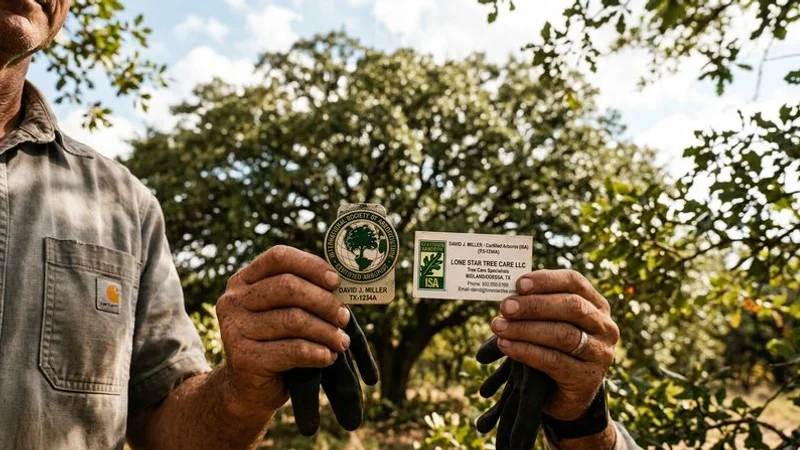
The Difference Between a Certified Arborist and a “Tree Guy”
Texas does not mandate a state license for tree work. Anyone with a chainsaw can advertise tree services online. The skill gap between operators is massive.
Knowledge Base
Deep biological knowledge dictates every aesthetic trimming decision. We train to understand how trees compartmentalize wounds to minimize long-term structural damage.
Tom Green County faces severe threats from oak wilt. The Bretziella fagacearum fungus devastates local populations.
Our crews strictly follow the Texas A&M Forest Service no-prune window from February through June. Immediate wound painting blocks the sap-feeding beetles that spread the disease.
Diagnostic Ability
Declining trees require a systematic and scientific diagnosis. Yellowing leaves might indicate iron chlorosis from alkaline San Angelo soils, herbicide drift, or simple drought stress.
We test the soil chemistry before recommending any treatments. Each unique diagnosis demands a completely different solution. An uncertified operator usually defaults to immediate tree removal.
Safety Standards
Hazardous tree removal remains an incredibly dangerous profession. The Bureau of Labor Statistics reports a fatality rate of 110 per 100,000 workers. This alarming 2023 statistic makes tree work roughly 30 times more dangerous than the national average.
Our safety protocols include specific rigging techniques for heavy branches. Proper fall protection saves lives in aerial lifts. These strict skills protect both workers and your physical property.
Industry Standards
Certified professionals adhere strictly to national tree trimming and pruning guidelines. The 2024 updated ANSI A300 standards define acceptable safety practices.
These rules prohibit removing more than 25 percent of a tree’s foliage in a single season. They also require a specific three-cut method to prevent bark tearing.
We strictly forbid the use of climbing spikes on healthy trees. Those sharp metal points puncture the bark and invite disease. Unqualified workers use them simply to save time.
Questions to Ask Before Hiring a Tree Service
Asking targeted questions prevents expensive property damage. We recommend keeping this checklist handy during any consultation.
- Are you an ISA Certified Arborist? Ask for the exact certification number. You can verify this credential directly on the official ISA website.
- Do you carry liability insurance? Request current certificates of insurance immediately. A legitimate company provides these documents without hesitation.
- Will you provide a written estimate? Professional tree services document the exact scope of work. They list specific trees, stump grinding plans, and total costs.
- What pruning standards do you follow? A true expert will instantly reference the ANSI A300 standards. Vague answers about cutting methods are a major warning sign.
- How will you handle my specific species? Ask about timing restrictions for your exact trees. Knowledgeable professionals will discuss the oak wilt risk window unprompted.
| Feature | ISA Certified Arborist | Uncertified Operator |
|---|---|---|
| Safety Protocols | Follows strict ANSI and OSHA safety standards. | Often lacks fall protection and proper rigging. |
| Pruning Methods | Uses the ANSI A300 3-cut method. | Frequently uses flush cuts and topping. |
| Local Knowledge | Understands regional oak wilt prevention. | Prunes oaks year-round without painting cuts. |
Red Flags in Tree Service Companies
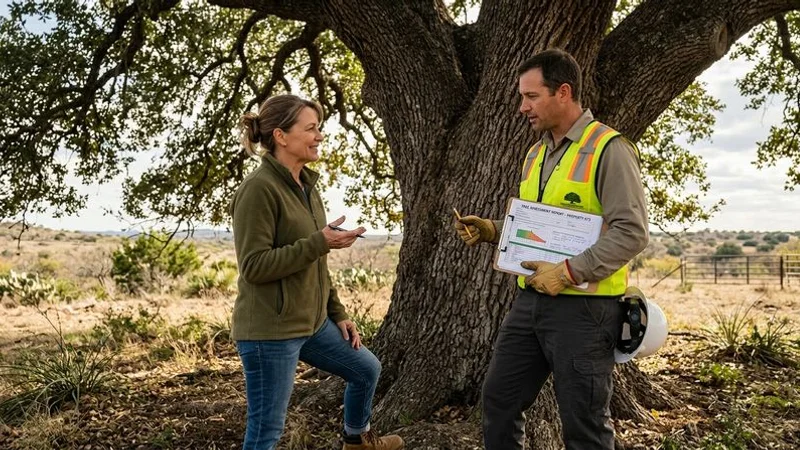
Recognizing dangerous business practices protects your wallet. Our team frequently cleans up messes left by unprofessional storm chasers.
- Door-to-door solicitation. Storm chasers descend on San Angelo after severe weather. They demand cash upfront and vanish before you discover problems.
- Recommending tree topping. Cutting main branches back to stubs ruins structural integrity. This terrible practice often kills the tree entirely.
- Operating without a contract. Handshake deals offer zero legal protection. You need written recourse if heavy branches damage your roof.
- Using climbing spikes for pruning. Spikes belong strictly on trees slated for complete removal.
- Dramatically lower prices. Extremely cheap estimates usually indicate missing insurance. The cheapest bid often costs the most in long-term property damage.
- No verifiable business address. A legitimate local business has a physical location. A simple phone number does not guarantee reliability.
Your mature trees are incredibly valuable assets. We manage every Tom Green County project under strict expert supervision. This dedication guarantees the long-term health of your landscape.
Knowing why you should hire an ISA Certified Arborist is your best defense against property damage. Contact San Angelo Texas Tree Service Pros today for a professional arborist consultation.
Tags: