What to Do When a Tree Falls on Your Property in San Angelo
Step-by-step guide for San Angelo homeowners dealing with a fallen tree. Learn immediate safety steps, when to call 911, how to document damage for insurance, and how to choose a reliable emergency tree service.
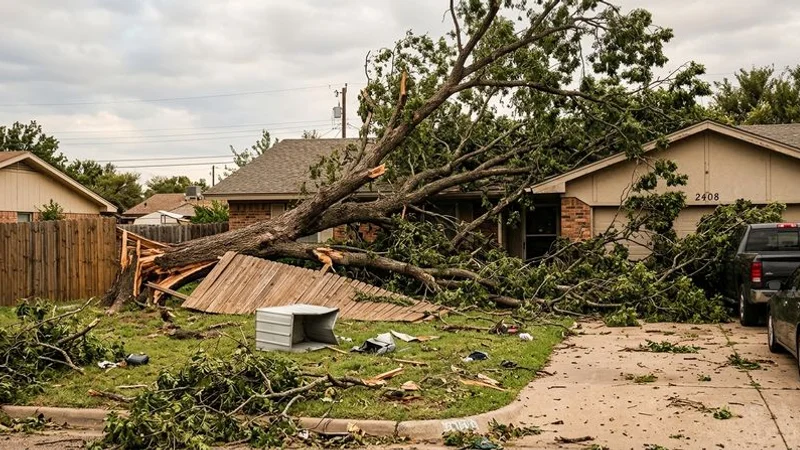
We at San Angelo Texas Tree Service Pros see the immediate panic caused by severe weather damage. Seeing a massive oak crash onto your roof brings a sudden rush of stress.
You need a clear plan for what to do when a tree falls on your property in San Angelo.
Our emergency tree service crews handle these exact situations following the severe thunderstorms that regularly hit the Concho Valley. The actions you take in the first hour will protect your family and preserve your insurance claim. I will outline the critical safety protocols and then walk you through the cleanup process.
Step 1: Ensure Everyone’s Safety
Your first priority is always the safety of everyone in and around your home. You must immediately move family members to a different part of the house away from the impact zone. Structural damage is rarely visible right away.
Stay at least 40 feet away from any downed lines. The National Weather Service in San Angelo reports that severe spring storms often produce wind gusts exceeding 60 mph. These winds easily snap utility poles and drop live wires into residential yards.
We always warn homeowners about the risk of secondary collapse. Account for everyone in the household and check for injuries. You should call 911 immediately if anyone is trapped or hurt.
Our protocol requires staying at least 40 feet away from any compromised electrical lines. Treat every downed wire as live and deadly.
Call AEP Texas directly at their 866-223-8508 emergency number to report downed wires. Do not attempt to move branches resting against power lines.
If you suspect a natural gas leak, leave the area immediately. You should then call the Atmos Energy emergency response line at 866-322-8667 from a safe distance. Keep everyone, including pets, away from the area until emergency responders arrive.
Step 2: Determine Whether to Call 911
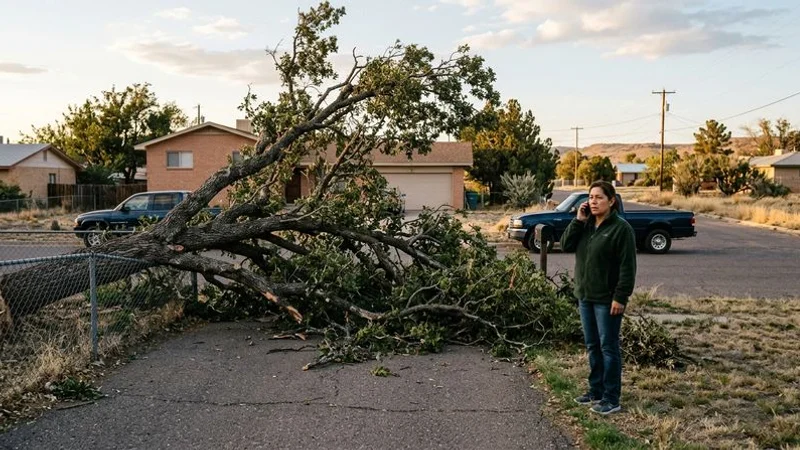
Not every fallen branch requires an emergency services response. You must determine the severity of the situation quickly. Use this quick reference guide to help you decide who to call first.
| Situation | Who to Call | Why It Matters |
|---|---|---|
| Injuries or trapped individuals | 911 Emergency | Fire department rescue teams have extraction equipment. |
| Downed power lines | AEP Texas (866-223-8508) & 911 | Utility companies must shut off grid power safely. |
| Tree blocking public road | City of San Angelo Public Works | City Street and Bridge crews manage traffic hazards. |
| Gas leak smell | Atmos Energy (866-322-8667) & 911 | Immediate response prevents catastrophic explosions. |
| Tree in yard (no structural hit) | Local Tree Service Company | Private property cleanup is a non-emergency. |
You can proceed directly to contacting a tree service if the incident only involves your yard.
Step 3: Document the Damage Thoroughly
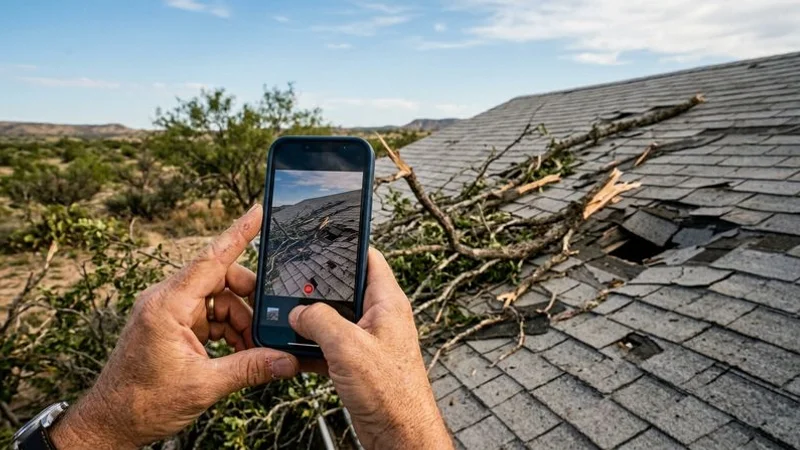
Thorough documentation is essential for your insurance claim before any cleanup begins. You need to gather evidence as soon as the area is safe.
- Take wide photos showing the entire tree and the specific location where it landed.
- Capture close-up photos highlighting damage to your home, fence, and vehicles.
- Photograph any injury to the trunk or root plate.
- Use the timestamp feature on your smartphone camera to provide excellent proof for your claim.
We suggest recording a video walkthrough of the entire affected area. Video captures spatial relationships and the true extent of the damage much better than still photos. Narrate what you see while recording to provide context.
Our team recommends completing a specific checklist for the insurance adjuster. Move damaged personal property out of the weather if possible.
Record the exact date and time the incident occurred. Check local weather records through the National Weather Service San Angelo office for official storm documentation.
Make temporary repairs to prevent further water damage. Cover any roof openings with tarps and save all hardware store receipts. Your insurance policy typically reimburses reasonable temporary repair costs.
Step 4: Contact Your Insurance Company
Call your homeowners insurance provider within 24 hours of the incident. You need to understand how Texas insurance policies handle storm damage.
What Your Policy Typically Covers
Damage to your home, garage, and fences caused by a fallen limb is generally covered under standard policies. The insurance company also pays for the cost of removing the trunk from the structure itself. You will need to provide the photos and video documentation you collected.
A tree that falls in your yard without hitting a structure rarely triggers coverage for removal. Many Texas policies limit yard debris removal to a specific dollar amount, often capping between $500 and $1,000 per incident.
Understanding Your Deductibles
You must pay your deductible before insurance coverage kicks in. In Tom Green County, separate wind and hail deductibles are extremely common on homeowners policies. These deductibles are usually calculated as a percentage of your home’s total insured value, typically 1% or 2%, rather than a flat dollar amount.
Local San Angelo insurance agents warn that emergency tree removal costs fluctuate based on severity. The average cost for emergency tree removal in Texas during 2026 ranges widely from $889 to over $3,000 depending on crane requirements and off-hours scheduling. Ask your adjuster if they have preferred vendors for immediate emergency stabilization.
Step 5: Choose an Emergency Tree Service
Selecting the right contractor for emergency removal is a critical decision. Out-of-town operators frequently arrive in San Angelo looking for fast cash after major storms. Not all of these crews are reputable or properly equipped.
Verify Credentials and Insurance
Any crew working on your property must carry both general liability insurance and workers compensation insurance. You should ask for physical certificates of insurance and verify they are current. You could be held liable if an uninsured worker is injured in your yard.
Check for an ISA Certified Arborist on staff. This certification proves the company follows strict 2026 industry safety standards. Uncertified crews might take dangerous shortcuts that cause secondary damage to your house.
Beware of Storm Chasers
Unlicensed operators go door to door soliciting work after severe weather events in the Concho Valley. Legitimate companies will provide a written estimate before starting any work. Watch out for these specific red flags:
- Out-of-state license plates on work trucks.
- Pressure to sign a contract immediately.
- Demands for cash payment upfront.
- Lack of a physical local business address.
Confirm whether the quoted estimate includes hauling away all debris. Some cut-rate companies remove the main trunk but leave behind a massive mess of chips and branches. Stump grinding is usually a separate service that adds $150 to $350 to the final bill.
What to Expect During Emergency Tree Removal
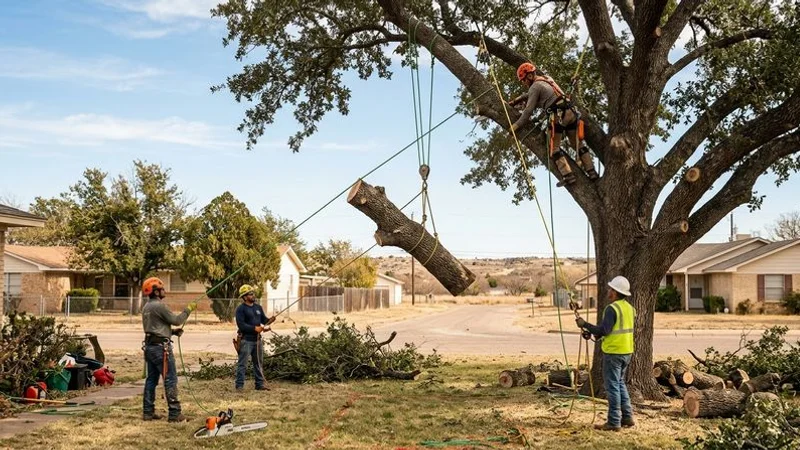
Professional emergency removal from a damaged structure is a highly methodical process. The crew assesses the tension points and weight distribution before making a single cut. They section the wood in a controlled sequence to prevent further structural damage.
Here is the standard progression for an emergency removal:
- Securing the perimeter and staging equipment.
- Relieving tension from branches resting on the structure.
- Lifting heavy trunk sections with a crane.
- Lowering debris safely to the ground.
- Chipping brush and hauling away heavy wood.
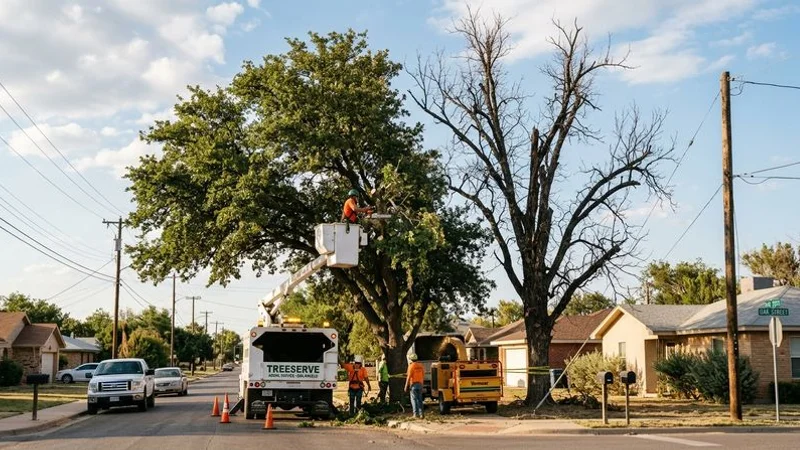
We utilize heavy-duty cranes for large oak and pecan trees resting on houses. This equipment allows us to lift thousands of pounds of wood straight up and away from your roof. The extraction process for a medium to large tree in San Angelo typically takes several hours.
Our crews will cut the branches into manageable sections and lower them safely to the ground. You can schedule stump grinding at the same time or book it for a later date.
Preventing Future Tree Failures
You must take proactive steps to reduce the risk of future failures once the immediate emergency is handled. Have a certified arborist inspect your remaining landscaping for structural defects and signs of decay. Regular maintenance keeps your property much safer.
Proactive Pruning Strategies
Proactive tree trimming significantly reduces the risk of limbs snapping during the next storm. You should remove dead wood and thin the canopy to let high winds pass through harmlessly. Proper tree cabling and bracing provide extra support for heavy or split branches.
We advise homeowners to time their trimming carefully based on tree species. The safest window to trim live oaks in San Angelo is mid-summer or late winter. Trimming during these specific months helps prevent the spread of Oak Wilt disease in our region.
Our certified arborists have the specific expertise needed to evaluate and secure your yard. Proper care today prevents a massive headache tomorrow.
Conclusion
We are ready to help you recover from unexpected storm damage. A rapid response makes all the difference when securing your home and property.
You now know exactly what to do when a tree falls on your property in San Angelo.
Our emergency crews provide 24/7 service throughout Tom Green County to handle dangerous removals safely. Call San Angelo Texas Tree Service Pros immediately if you need professional assistance.
Tags: