What Happens to Your Yard After Stump Grinding?
Find out exactly what to expect after stump grinding in San Angelo. Learn about wood chip cleanup, hole filling, soil settling timelines, replanting options, and complete lawn restoration steps.
From what I have seen, removing a tree is only half the battle. You finally make the smart decision to have that old stump ground out of your San Angelo yard. The grinder does its work, the crew packs up, and you expect a clean slate.
Instead, you find yourself staring at a massive pile of wood chips where a stump used to be. We understand exactly how frustrating this surprise can feel. Many homeowners in Tom Green County are unsure how to restore the area properly.
If you are wondering what happens to your yard after stump grinding, let’s look at the data behind this excess material and walk through the exact steps to restore your property.
What Happens to Your Yard After Stump Grinding: The Leftover Material
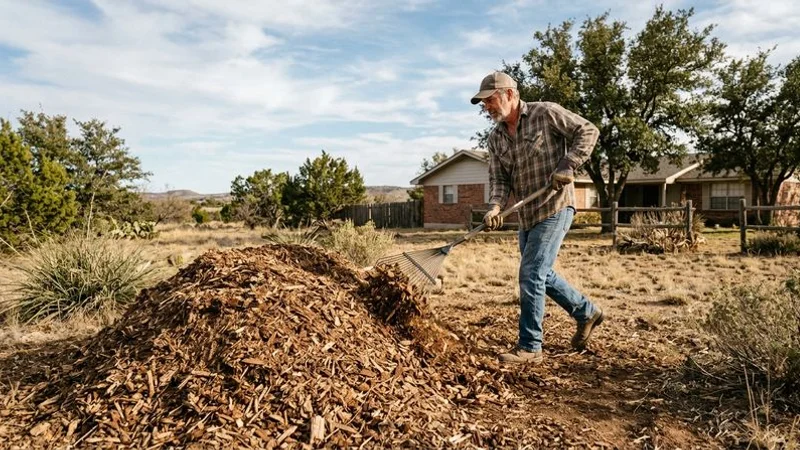
When a professional stump grinding machine tackles a tree, the rotating cutting wheel chips the wood into small pieces and mixes them with the surrounding soil. The result is a mound of wood chips, sawdust, and dirt. This pile is typically much larger than the original stump.
We often warn customers about the “volcano effect” of stump grinding. Recent 2026 data from landscaping equipment manufacturer MechMaxx shows that ground wood chips expand to three or four times the volume of the solid stump. A 24-inch stump can easily produce enough material to fill several wheelbarrows.
This process also creates a depression in the ground. Most professional services grind 6 to 12 inches below the soil surface.
Here is what you will typically find left in your yard:
- Excess wood volume: A massive pile of mixed chips and dirt.
- A deep depression: A hole reaching up to a foot below the grade.
- Underground roots: The remaining lateral root system spreading outward.
These lateral roots will slowly decompose over the next 5 to 10 years. Our dry climate in San Angelo makes decomposition take longer than in humid regions. Soil organisms that break down wood require moisture to work efficiently.
What to Do with the Wood Chips
You have several practical options for managing this newly generated material.
Use Them as Mulch
The most practical use is spreading the chips as mulch in garden beds, around trees, or along fence lines. Stump grindings make excellent mulch that helps retain soil moisture.
We highly recommend using this free mulch to combat our intense West Texas climate where summer temperatures regularly exceed 100 degrees. Spread the chips 2 to 3 inches deep. Keep the material a few inches away from plant stems and tree trunks to prevent rot.
Have Them Hauled Away
If you do not need mulch, most local tree service companies will haul the grindings away for a fee. Some companies include a basic cleanup in their grinding price. Ask about disposal options when you get your estimate.
Compost Them
Wood chips make a fantastic carbon-rich addition to any compost pile. Arborist wood chips have a very high Carbon-to-Nitrogen ratio, typically around 300 to 1.
Our team suggests mixing these “browns” with nitrogen-rich “greens” like grass clippings and kitchen scraps to speed up the process. Fresh wood chips will temporarily tie up nitrogen in the soil as they decompose. Do not work them directly into garden soil where you plan to grow plants immediately.
Filling the Hole
After removing the excess wood chips, you must fill the resulting depression. We recommend a very specific process for properties in San Angelo.
West Texas soils often feature a hard caliche layer and highly alkaline pH levels ranging from 7.0 to 8.5. Filling the hole properly helps correct these soil imbalances.
- Remove loose material. Rake out the wood chips from the hole to prevent nitrogen depletion in your new soil.
- Add quality topsoil. Fill the empty space with clean topsoil instead of the wood chip mixture. Look for topsoil blended with compost to improve our naturally alkaline clay soils.
- Overfill slightly. Mound the soil 2 to 3 inches above the surrounding grade. The fill material settles over the coming months as it compacts.
- Water thoroughly. Soak the filled area to eliminate air pockets. You may need to water the area several times over the first week.
- Monitor the grade. Check the area after a few weeks and add more topsoil if a depression forms.
Soil Settling Timeline
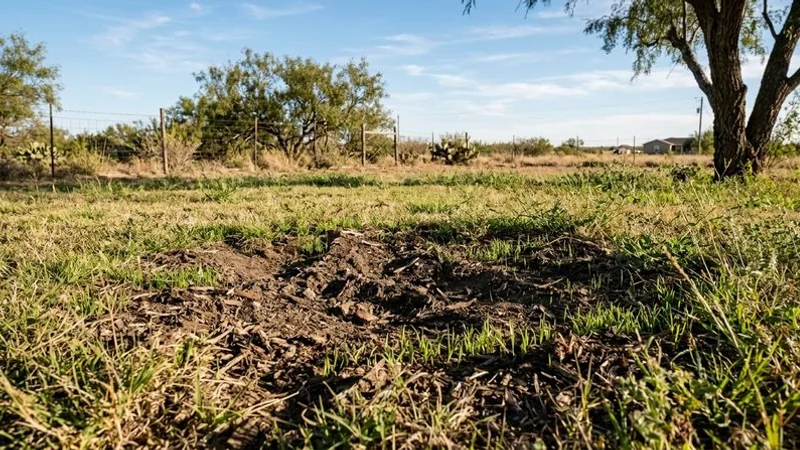
The ground where a stump sat will continue to settle for months as the root system decomposes underground. Hardwood species like live oak and mesquite take the longest to break down.
We advise homeowners to prepare for occasional yard maintenance over the next few years. Softer species like cottonwood and elm decompose much more quickly.
Here is a general timeline for soil settling in Tom Green County:
| Timeframe | Settling Activity | Required Action |
|---|---|---|
| First 1 to 3 Months | Significant settling as loose fill compacts. | Add topsoil at least once to level the ground. |
| 3 to 12 Months | Moderate settling as surface roots decompose. | Top off the area one or two more times. |
| 1 to 3 Years | Gradual settling as large lateral roots break down. | Normal lawn maintenance usually keeps it level. |
| 3 to 10 Years | Deep root material fully decomposes. | Monitor for rare, small depressions. |
Replanting Options
Once the area has settled, you can start dreaming up new landscaping ideas for the space.
Restore the Lawn
This is the most popular choice for San Angelo homeowners. Spread grass seed appropriate for our area after the initial soil settling phase.
We see great success with Bermuda grass in sunny spots, while St. Augustine works well in shadier areas. Water consistently during establishment. Seed takes about 3 to 6 weeks to establish, and sod takes 2 to 3 weeks.
Plant a New Tree
Wait at least one full growing season after grinding before planting a replacement tree. Position the new tree 3 to 4 feet away from the old stump location.
Our arborists suggest choosing drought-tolerant species suited to West Texas conditions, and scheduling deep root fertilization to give new plantings the best start. Desert willow, Texas red oak, or chinkapin oak are excellent choices. Be prepared to dig through any hard caliche layers to ensure proper drainage.
Create a Garden Bed
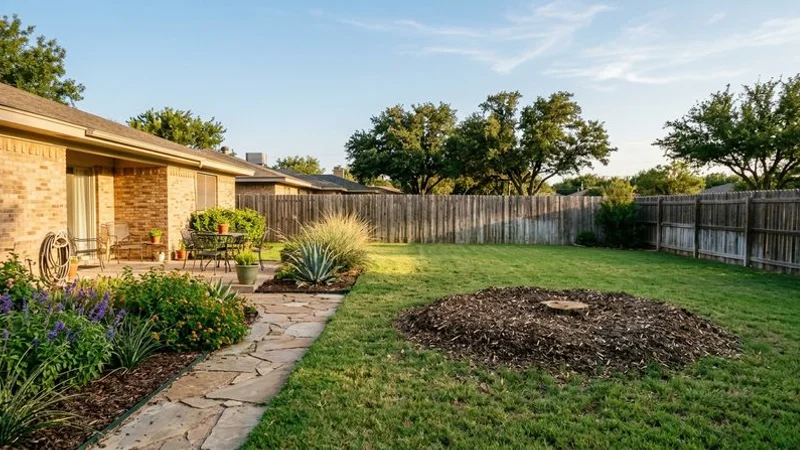
The old stump location can easily become an attractive garden bed. Build up the soil level and amend it with rich compost. Plant drought-tolerant perennials, shrubs, or ornamental grasses like Red Yucca or Texas Sage that thrive in our climate.
Install Hardscaping
If you want to place a patio or walkway over the area, allow at least 12 to 18 months for the soil to settle completely.
We highly recommend full stump extraction rather than grinding for permanent structures. This prevents long-term foundation issues caused by rotting roots.
Dealing with Root Sprouts
Certain tree species are notorious for sending up aggressive sprouts from their remaining root systems.
Here are the most common offenders in the San Angelo area:
- Mesquite: Extremely aggressive resprouters that can send up dozens of shoots.
- Chinaberry: Persistent sprouts that can appear for several years.
- Mulberry: Moderate sprouting from shallow lateral roots.
- Hackberry: Occasional sprouts that are usually manageable.
If sprouts appear, cut them off at ground level immediately. Consistent removal starves the root system of the energy required to produce new growth. Most species stop sprouting after two growing seasons of persistent cutting.
We rely on targeted herbicide applications for stubborn mesquite roots. Texas A&M AgriLife Extension research shows that applying an herbicide containing Triclopyr directly to freshly cut sprout surfaces provides 90 to 98 percent control. This targeted approach stops the sprouting cycle fast.
Getting Your Yard Back to Normal
Managing what happens to your yard after stump grinding typically takes 3 to 6 months in San Angelo. The secret is patience with the settling process and consistent attention to your soil levels.
We are ready to help if you need guidance anywhere in Tom Green County. San Angelo Texas Tree Service Pros handles the entire process from grinding to debris cleanup.
Call us today to schedule your yard assessment and reclaim your outdoor space.
Tags: