How to Prepare Your Trees for West Texas Storm Season
Protect your San Angelo property by preparing your trees before storm season. Learn about pre-storm pruning, hazard tree identification, cabling weak branches, creating a tree inventory, and building an emergency plan.
We constantly see how spring weather in the Concho Valley targets tree weaknesses most property owners overlook. Early 2026 weather tracking points to an above-average hail probability for West Texas, bringing wind gusts that frequently exceed 60 mph. That kind of force easily snaps neglected limbs and turns them into dangerous projectiles.
Learning how to prepare your trees for West Texas storm season is crucial for protecting your property.
Our team will break down the main reasons these failures happen and walk through the exact preparation steps you can take today. Let’s look at the data, examine what it actually tells us, and explore a few practical ways to respond.
Pre-Storm Pruning: How to Prepare Your Trees for West Texas Storm Season
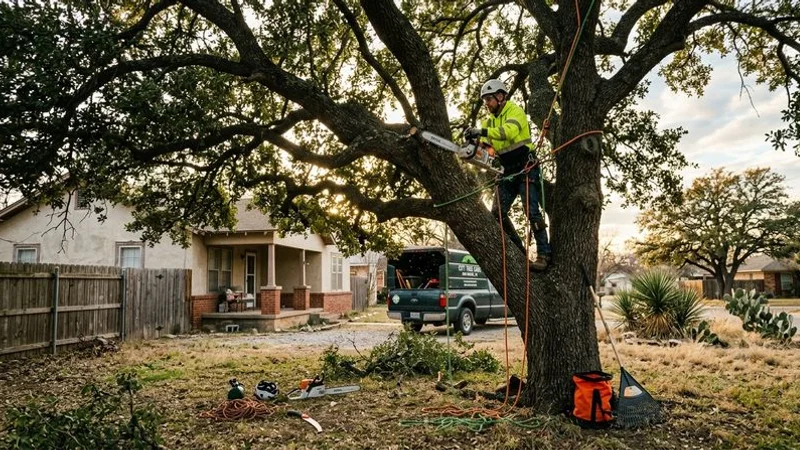
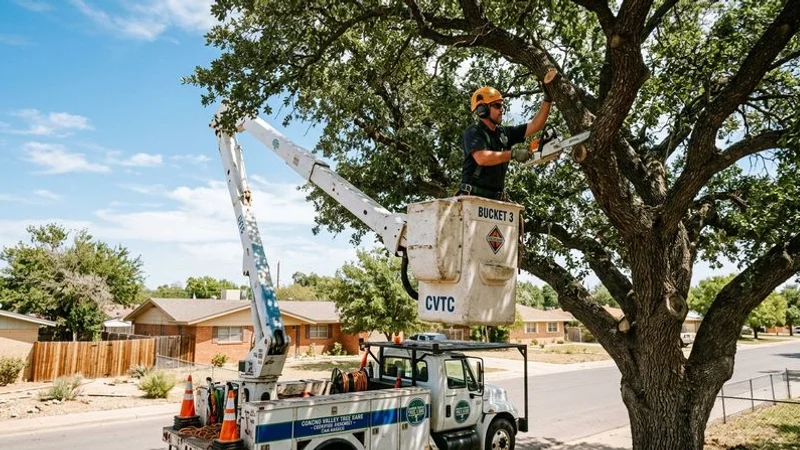
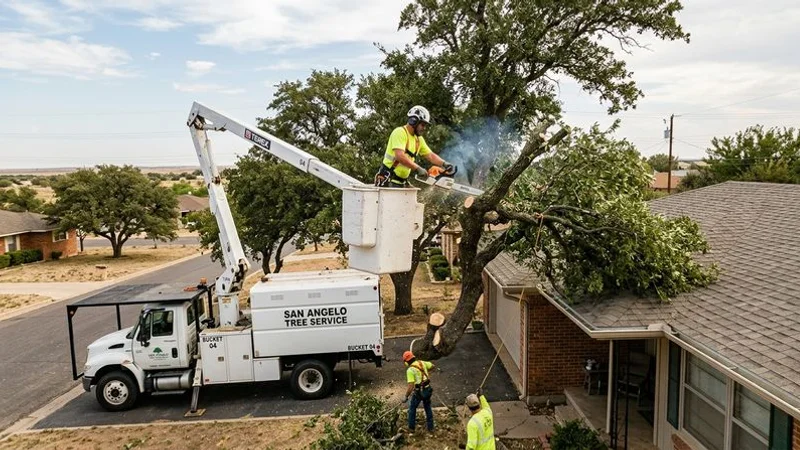
Proper pruning removes the specific elements of a tree’s structure that make it vulnerable to wind and ice loads. Our dedication to high-quality arboriculture solutions in San Angelo means we have seen exactly what survives a storm and what fails. Professional tree trimming and pruning is the single most effective step you can take to reduce storm damage risk.
Remove Dead and Dying Branches
Dead branches are brittle and carry unnecessary weight. They are the first to break loose during high winds, and even moderate storms can send them crashing onto roofs or vehicles. A thorough deadwood removal eliminates these hazards before they fall.
We recommend removing deadwood from all mature shade trees annually. March 2026 weather data recorded post-frontal wind gusts between 45 and 60 mph across West Texas. Those speeds will easily dislodge decaying branches from live oaks, pecans, and red oaks.
Thin the Canopy
Crown thinning selectively removes interior branches to allow wind to pass through the canopy rather than catching it like a sail. We follow the Texas A&M Forest Service guidelines, which suggest a 10 to 15 percent crown thinning for mature live oaks.
A properly thinned canopy reduces wind resistance by 20 to 40 percent, dramatically lowering the forces acting on the trunk and root system. You must do this carefully and never remove more than 15 to 20 percent of the live canopy in a single session.
Pro Tip: Excessive thinning actually makes trees more vulnerable by concentrating wind stress on fewer remaining branches.
Address Structural Weaknesses
Certain branch configurations are extremely prone to failure during severe weather. Co-dominant stems, where two major trunks of similar size emerge from the same point, represent a massive structural flaw.
Recent arborist studies show that forks with co-dominant stems and included bark are up to 33 percent weaker than normal branch attachments. Our ISA Certified Arborists can identify these V-shaped junctions early. They can either correct them through reduction pruning or recommend supplemental support where appropriate.
Timing Is Important
The ideal time to complete storm preparation pruning in San Angelo is late winter. This December through February window allows work to be done during dormancy when the tree structure is highly visible.
We always avoid scheduling major pruning work on any oak species during the high-risk oak wilt window of February through June. The Texas A&M Forest Service warns that the Bretziella fagacearum fungus spreads rapidly during these months via sap-feeding beetles.
You must paint fresh wounds on oaks immediately, regardless of the season, to deter these insects.
Identifying Hazard Trees
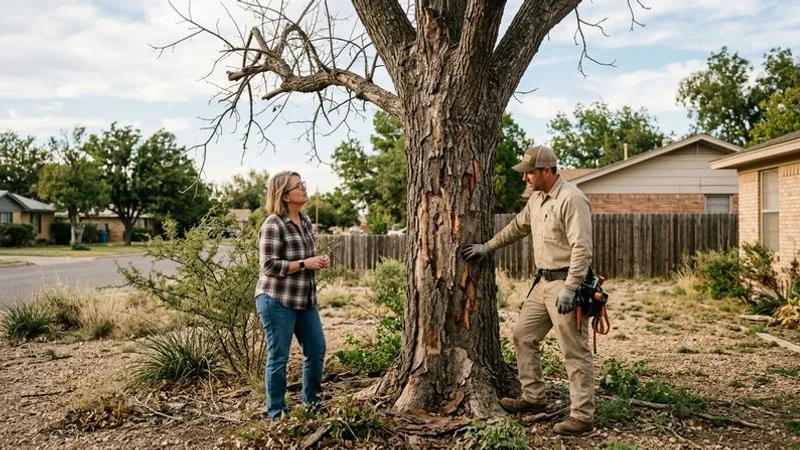
Not all tree failures can be prevented with pruning alone. Some trees have fundamental structural or health problems that make them likely to fall during severe weather. Identifying these hazard trees before March allows you to address the risk proactively.
Signs a Tree May Be Hazardous
You can spot several warning signs if you know exactly what to look for in your yard.
- Significant lean: A tree that has developed a new lean over 15 degrees signals root plate failure.
- Trunk decay: Cavities, soft spots, and fungal mushrooms growing from the trunk indicate internal decay.
- Severe crown loss: A tree with more than 50 percent dead branches cannot produce enough energy to recover.
- Hanging widow makers: Broken limbs larger than four inches in diameter hanging by bark strips can fall without warning.
- Previous failures: A tree that has already lost major branches in past storms has demonstrated structural weakness.
What to Do About Hazard Trees
If you identify a potentially hazardous tree, have it evaluated by a certified professional right away. Our experts can perform a detailed risk assessment and recommend mitigation measures. Removing a hazardous tree before it fails is almost always less expensive than dealing with an uncontrolled collapse.
Current 2026 pricing data shows that standard professional tree removal averages between $820 and $992. Emergency tree service removal after a storm can cost up to $5,000 if the tree falls on a structure and requires a crane. This planned expense is far cheaper than paying a high insurance deductible for roof reconstruction.
Cabling and Bracing Weak Branches
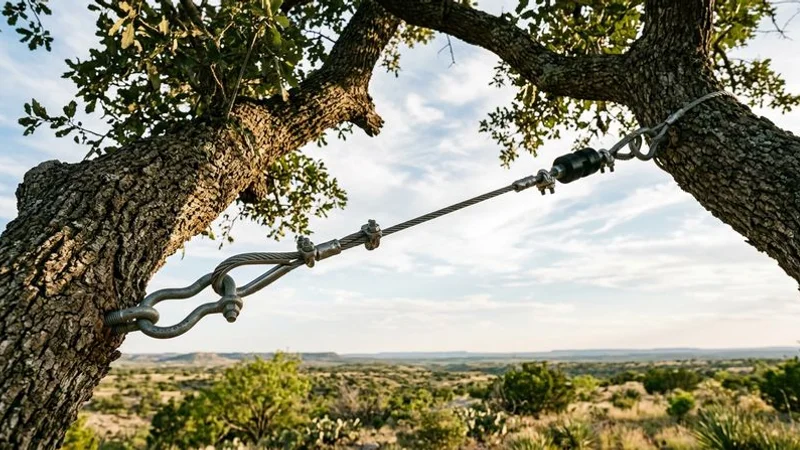
For trees with structural weaknesses that do not warrant removal, supplemental support systems prevent failure during storms. We frequently install the Cobra Dynamic Bracing System for large, valuable shade trees.
This modern synthetic system offers massive support while allowing the tree to move naturally. The popular 4-tonne Cobra system uses a 22-millimeter hollow polypropylene cable that provides a guaranteed minimum tensile strength of 4 tonnes for a full 12 years.
- Cabling: This involves installing flexible synthetic cables high in the canopy to limit the movement of co-dominant stems. The elastic shock absorbers allow natural sway while preventing the dangerous snapping effect during 70 mph winds.
- Bracing: This method uses threaded steel rods installed through weak branch junctions to reinforce the connection.
These systems require periodic inspection to ensure they remain secure. For valuable mature trees in San Angelo landscapes, tree cabling and bracing provides the best balance of cost, preservation, and risk reduction.
Creating a Tree Inventory
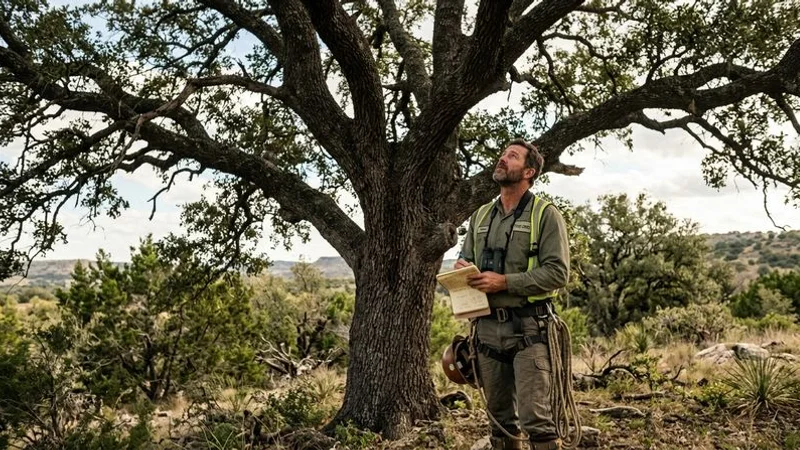
Knowing exactly what trees you have and their current condition gives you a baseline for post-storm damage assessment. Walk your property and document each significant tree before the severe weather arrives.
Our team recommends noting the species, approximate size, general condition, and proximity to structures. Photograph each tree from multiple angles to serve three key purposes:
| Purpose | Practical Benefit |
|---|---|
| Prioritization | Trees closest to your house, garage, and vehicles are the highest priority. A large pecan overhanging your roof deserves attention before a mesquite in the back corner. |
| Insurance documentation | Pre-storm photos of healthy trees support your insurance claim by proving the failure was storm-caused rather than neglected maintenance. |
| Arborist reference | Your inventory gives a professional a head start in understanding your property needs quickly. |
Building a Storm Emergency Plan
Preparation extends beyond the trees themselves to how you manage the aftermath. Having a plan for what to do when severe weather strikes keeps your family safe and helps you respond efficiently.
We strongly advise identifying a reputable tree service before you actually need one. Response times can stretch to weeks after major storms hit San Angelo, leaving you stuck with dangerous debris.
- Know the financial impact: Emergency after-hours tree removal can spike by 50 to 100 percent compared to scheduled services.
- Identify safe zones: Know which areas of your home are safest during a storm. Stay away from large windows and the sides of the house with the biggest trees.
- Have supplies ready: Keep tarps, plywood, and basic tools accessible. Making temporary repairs immediately after a storm prevents secondary water damage.
- Review your insurance policy: Understand your deductible, coverage limits, and the exact process for filing a claim.
We recommend scheduling a storm preparation assessment in late winter or early spring before the severe weather season begins. Understanding how to prepare your trees for West Texas storm season prevents costly damage and keeps your property safe. Contact San Angelo Texas Tree Service Pros to schedule your evaluation anywhere in Tom Green County and the Concho Valley.
Tags: