How to Identify Oak Wilt in San Angelo Trees
Learn to recognize oak wilt symptoms in San Angelo trees, including veinal necrosis, fungal mats, and crown dieback. Understand how this deadly disease spreads and discover treatment and prevention options for your Concho Valley oaks.
Our crews constantly evaluate mature landscapes across West Texas, and we often see the same frustrating scenario playing out. A beautiful oak canopy gets wiped out simply because early warning signs were missed. Knowing how to identify oak wilt in San Angelo trees is your strongest defense, and professional insect and disease control can stop the aggressive fungus Bretziella fagacearum.
This native pathogen is incredibly destructive.
It can kill a completely healthy red oak in just four to six weeks. The Texas A&M Forest Service confirms this disease now affects 76 counties across the state. Catching the symptoms quickly offers three major advantages:
- Stops the fungus from spreading through your yard.
- Protects the surrounding neighborhood canopy.
- Preserves your mature landscape investment.
We prioritize early identification because it remains the single most important factor in saving affected trees. Let’s look at the specific visual symptoms, analyze how the disease moves, and outline the practical treatment options available for 2026.
Understanding How to Identify Oak Wilt in San Angelo Trees
We treat oak wilt as a severe vascular disease that physically starves your trees. The Bretziella fagacearum fungus invades the water-conducting vessels, which are called xylem. This invasion triggers the tree’s natural defense mechanisms, causing it to produce gums and tyloses that completely clog these vital pathways.
Our diagnostic teams see the tree essentially choke itself by cutting off its own water supply. Leaves wilt rapidly during the hot Texas summer. Branches die back, and the entire structure eventually collapses.
We observe different severity levels and timelines depending entirely on the specific oak species. Live oaks, scientifically known as Quercus fusiformis, are especially vulnerable because they grow in dense clusters with shared root systems. The following comparison highlights how the disease impacts the most common Texas oaks.
| Oak Species Group | Common Texas Varieties | Disease Severity & Timeline |
|---|---|---|
| Red Oaks | Texas red oak, Shumard oak, Spanish oak | Extremely susceptible. Typically die within 4 to 8 weeks. No effective treatment exists once symptoms appear. |
| Live Oaks | Texas live oak (Quercus fusiformis) | Highly susceptible but decline slowly over 1 to 6 months. Preventative Propiconazole treatments yield an 85% to 90% survival rate. |
| White Oaks | Bur oak, chinkapin oak, post oak | Most resistant. Rarely die from the infection. The disease does not spread easily through this group, resulting in a 99% recovery rate. |
Recognizing Veinal Necrosis
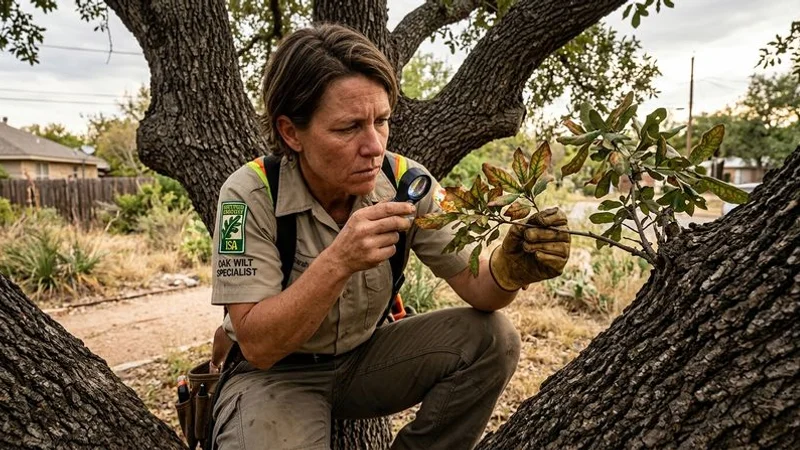
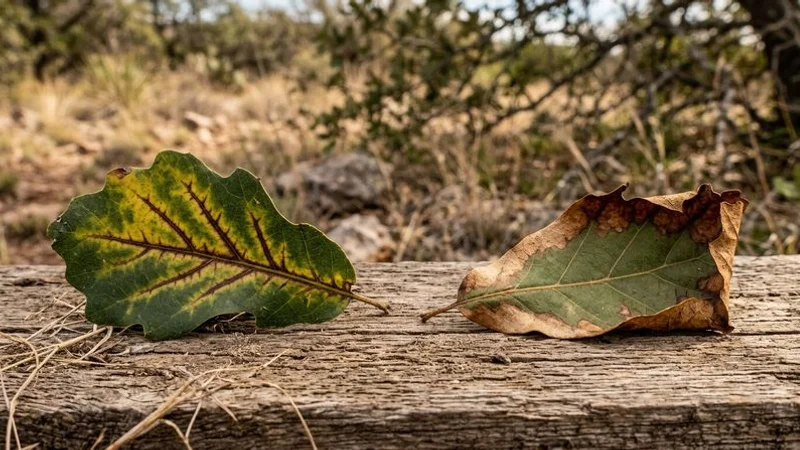
We rely on veinal necrosis as the primary diagnostic symptom when evaluating sick live oaks. This specific pattern of leaf death perfectly follows the veins of the leaf. Brown or yellow streaks run parallel to the natural vein structure.
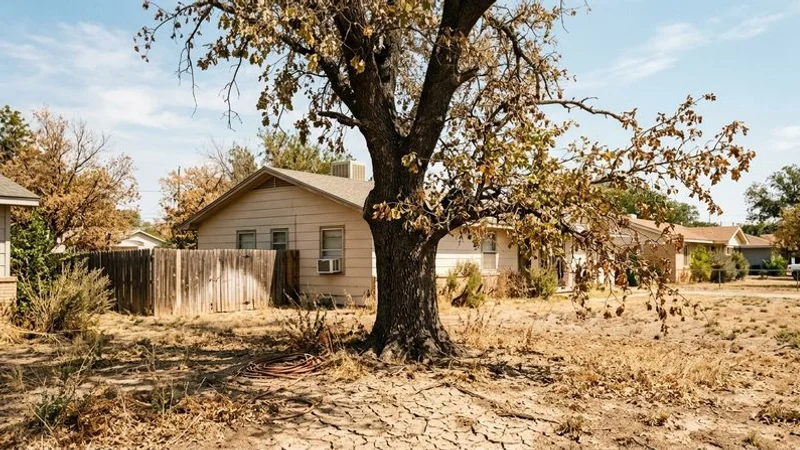
Our field crews easily distinguish this veinal necrosis from standard heat or drought stress. Typical drought causes leaves to brown uniformly from the outer edges inward. Oak wilt browning specifically traces the vein pattern, leaving surrounding tissue green.
“Green tissue frequently remains visible between the discolored veins during an active infection, making veinal necrosis an unmistakable diagnostic feature for our tree care technicians.”
We find that symptoms present very differently in highly susceptible red oak varieties. These leaves typically develop a water-soaked appearance before anything else. The foliage turns a dull green or bronze color and then browns from the margins inward.
These infected leaves often wilt and curl dramatically before dropping to the ground. Texas live oaks normally shed their old leaves during their seasonal transition in March. Significant leaf drop during the summer months is highly unusual and warrants immediate professional attention.
Other Key Symptoms
We evaluate several other critical warning signs beyond just leaf discoloration to build a complete diagnosis. Recognizing these secondary indicators helps property owners confirm a potential infection much faster.
Rapid Leaf Drop
We consider premature leaf drop a major warning sign during the active growing season. Infected live oaks might shed leaves steadily over several weeks or months. Red oaks can defoliate almost completely within just three to four weeks.
Our technicians always investigate promptly if an oak drops partially green leaves in the middle of summer. Healthy trees simply do not shed vibrant green foliage.
Crown Dieback
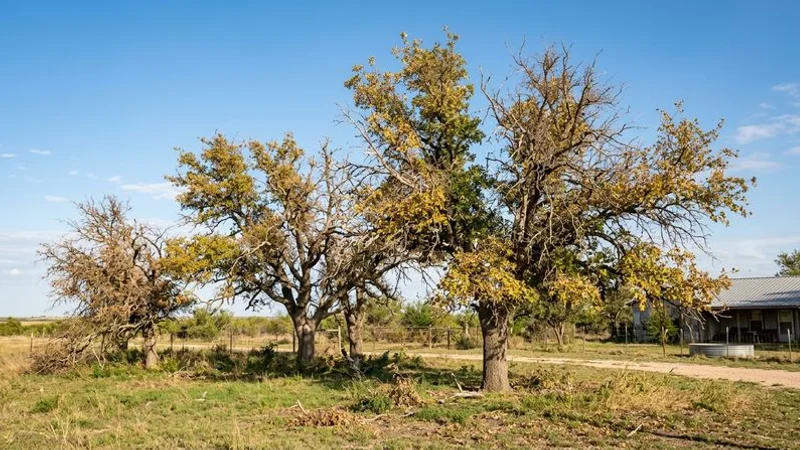
We frequently observe the canopy of an infected tree dying back progressively over time. Dieback in live oaks often begins in one specific section of the crown before spreading outward. The disease attacks the vascular system unevenly in these trees.
Our crews see a very different pattern when evaluating red oaks. The entire canopy of a red oak typically declines almost simultaneously.
Tip Dieback on Branches
We notice that small twigs and branch tips are usually the very first parts of the canopy to die. These tiny branches have the narrowest vascular pathways. They restrict water flow very quickly when the fungus invades the xylem.
Our advice is to schedule an evaluation immediately if you spot these specific changes:
- Clusters of dead, brown branch tips.
- Wilting foliage strictly at the outermost edges.
- Green foliage remaining closer to the trunk.
This stands out clearly while the rest of the tree still looks vibrant.
Fungal Mats
We search for spore-producing fungal mats directly beneath the bark of dead red oaks. The active Bretziella fagacearum fungus creates dense pressure pads that physically crack the bark open. These mats produce a distinctly fruity, fermented odor that resembles rotting apples.
Our field data shows this strong smell aggressively attracts sap-feeding Nitidulid beetles. These insects are the primary above-ground vector for the disease. The fungal mats serve as ground zero for new infections miles away.
We rarely find these mats on red oaks that have been dead for longer than a year. In the San Angelo area, they usually form during cool, wet periods in the spring and fall. The scorching Texas summers typically halt their development.
How Oak Wilt Spreads
We must fully understand how this disease moves through the landscape to protect healthy trees. The fungus utilizes two highly effective mechanisms to jump from tree to tree.
Root Graft Transmission
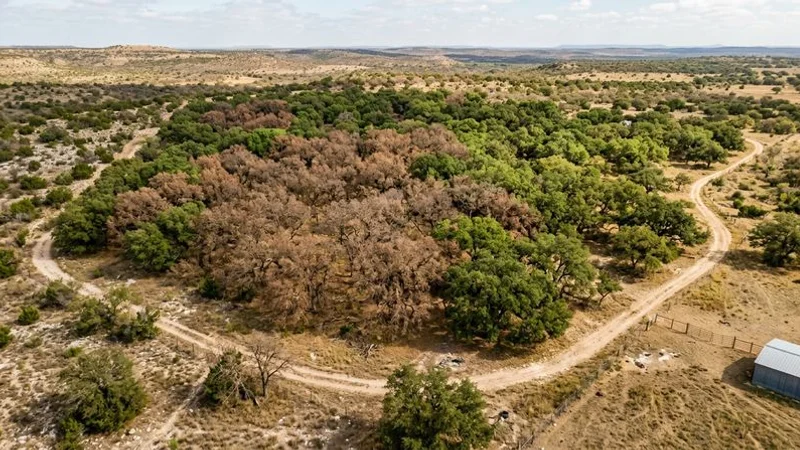
We see live oaks suffer devastating losses primarily due to root graft transmission. When live oaks grow near each other, their root systems naturally fuse together underground. These natural grafts allow water, nutrients, and fungal spores to pass freely between trees.
Our observations match the latest Texas A&M Forest Service data regarding the speed of this underground movement. Oak wilt kills groups of live oaks in expanding circles at an average rate of 75 feet per year. These expanding circles are known as infection centers.
We often find root grafts connecting trees that sit 50 to 100 feet apart in San Angelo neighborhoods. Once one tree in a cluster becomes infected, the fungus rapidly moves through the shared root system to every connected tree.
Beetle Transmission
We identify Nitidulid beetles, commonly known as sap beetles, as the principal insect vector above ground. These pinhead-sized insects feed directly on the fungal mats that form on dead red oaks. They pick up thousands of infectious spores on their bodies while feeding.
Our research indicates these tiny beetles can fly up to a full mile in search of food. When they land on a fresh wound on a healthy oak to feed on sap, they deposit the spores right into the vulnerable tissue. This initiates a brand new infection center miles away from the original source.
We strictly warn against pruning oaks from February 1 through June 30 for this exact reason. Fresh pruning cuts release chemicals that remain highly attractive to these beetles for several days. In the Concho Valley, spring represents the absolute highest risk period for beetle transmission.
Treatment Options
We urge property owners to act very quickly if they suspect an infection. Treatment effectiveness decreases dramatically every single day the disease progresses inside the vascular system.
Trenching to Break Root Grafts
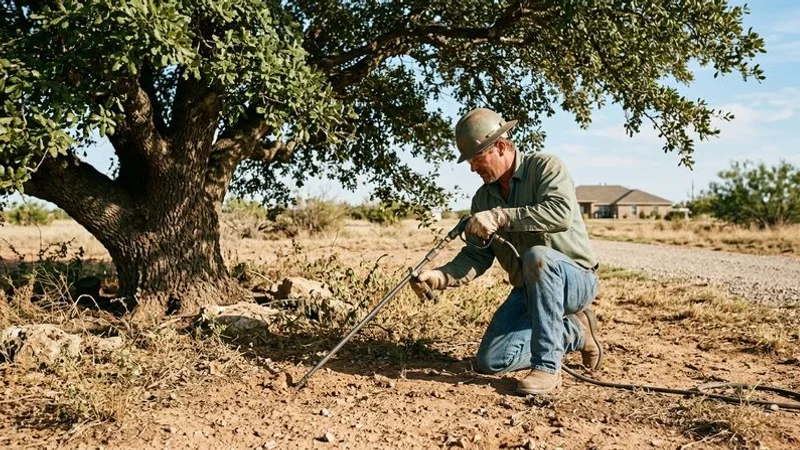
We rely heavily on trenching as the primary management tool for active infection centers. A specialized machine digs a trench at least four feet deep completely around the affected area. This physical barrier severs the root grafts and stops the fungus from spreading to connected trees.
Our equipment often needs to cut even deeper to ensure all roots are completely severed. A recent 2025 post-suppression evaluation study from the Texas A&M Forest Service showed that properly installed trenches boast roughly an 81 percent success rate. Trenching must be done proactively, positioned at least 100 feet ahead of where the disease is currently showing symptoms.
We know that suppression trenching represents a significant financial investment. Depending on the length and the rocky Texas terrain, most trenching projects cost between $4,000 and $9,000. Eligible landowners can apply for the 2026 Texas Oak Wilt Cost Share Program to offset up to $5,000 of these approved trenching expenses.
Trunk Injection with Propiconazole
We utilize specialized macro-infusion trunk injections with the fungicide Propiconazole, sold commercially as Alamo, for high-value live oaks. This chemical is injected directly into the vascular system through small holes drilled into the root flares. It works exceptionally well as a preventative measure.
Our arborists consistently see a 90 percent survival rate when asymptomatic live oaks are treated preventatively. This compares to a mere 15 percent survival rate for trees left entirely untreated. The manufacturer recommends a precise dosage of 10 milliliters of Alamo per inch of trunk diameter, diluted in one quart of water.
We calculate the treatment cost based on the diameter of the tree trunk. The average mature tree costs around $250 per treatment. This process typically needs to be repeated every one to two years to maintain an effective defense.
Red Oak Management
We cannot save infected red oaks once the visible symptoms appear. The vascular damage progresses far too rapidly for any fungicide treatment to work. These highly susceptible trees become immediate safety hazards and must undergo professional tree removal as quickly as possible.
Our hazardous tree removal crews follow strict disposal protocols to prevent new fungal mats from forming. The 2026 state cost-share program now provides up to $2,000 to assist property owners with the professional removal of specific diseased red oaks. Safe disposal options include:
- Immediate chipping to destroy the fungal habitat.
- Deep burial to eliminate insect access.
- Tarping firewood tightly for a full year.
We instruct homeowners to cover any retained cut wood with thick, clear plastic sheeting. You must seal the edges tightly to the ground with dirt to trap the insects and heat. The wood needs to bake under the plastic so the intense summer temperatures kill the lingering fungus.
Prevention Is the Best Strategy
We consider proactive prevention the absolute most effective way to protect your San Angelo property. Defending your landscape requires a firm commitment to a few straightforward rules.
- Never prune oaks from February 1 through June 30. The risk of sap beetle transmission peaks drastically during these spring months. If emergency storm cleanup is required, seal all cuts immediately.
- Paint all wounds immediately. Any cut, broken branch, or construction damage must be painted right away to block insect access. Standard latex paint or commercial tree wound dressing works perfectly.
- Do not move firewood. Transporting infected red oak firewood is the primary way this disease jumps to new, uninfected counties across Texas.
- Hire a certified arborist. Professional arborist consultations help you understand exactly how to manage oak wilt risks, execute proper sterilization, and determine correct pruning timing.
We encourage you to prioritize the health of your mature trees before an outbreak occurs. Learning how to identify oak wilt in San Angelo trees saves significant money and preserves your property value.
Contact San Angelo Texas Tree Service Pros today for a professional evaluation. Early detection and proper management can save your trees and protect your entire neighborhood canopy from this devastating disease.
Act now to secure your landscape.
Tags: