Why Your West Texas Trees Need Deep Root Fertilization Before Summer
Discover why deep root fertilization in spring is critical for tree health in San Angelo and West Texas. Learn about nutrient needs, drought preparation, soil conditions, and species-specific benefits for Concho Valley trees.
Experience shows that preparing a landscape for heat stress is the difference between a thriving canopy and an expensive removal project.
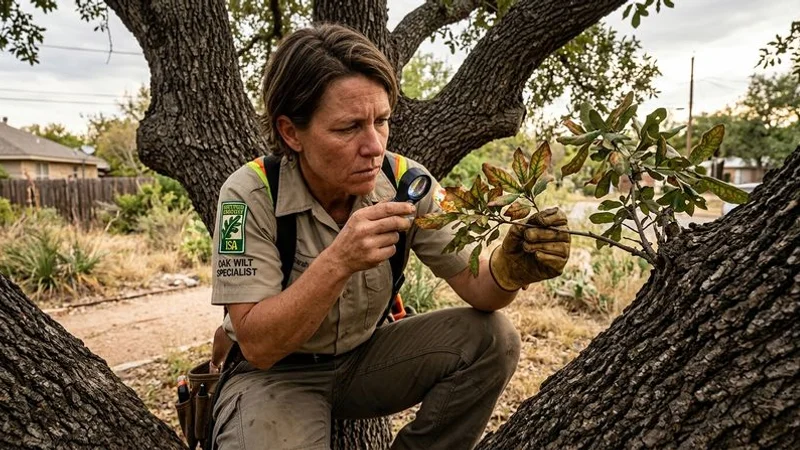
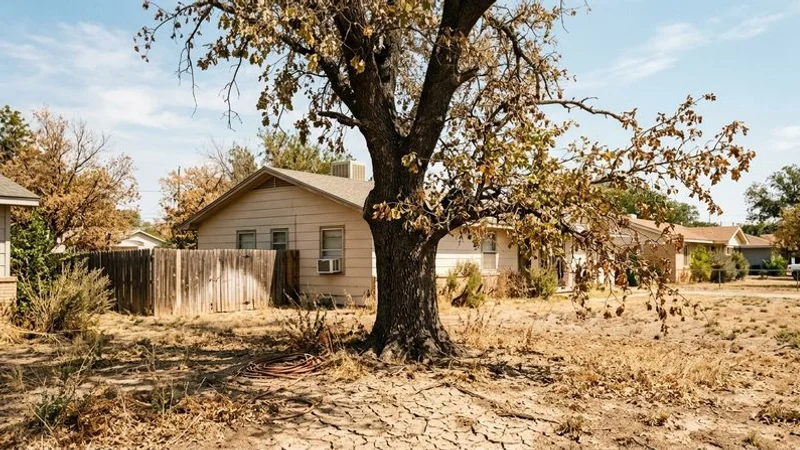
We know how brutal a San Angelo summer feels. The Texas drought monitor reported that 84 percent of the state was already facing severe dry conditions by April 2026. Our ISA Certified Arborists at San Angelo Texas Tree Service Pros witness this heat damage personally every year.
Trees that survive these punishing conditions with healthy leaves almost always receive proper care before the heat arrives. We prefer early intervention as the most effective method for protecting your property. Why Your West Texas Trees Need Deep Root Fertilization Before Summer comes down to building a subterranean survival kit.
Our team will break down exactly how this service works and why it gives your plants a critical advantage. Let’s look at the data and explore a few practical ways to respond to the changing climate.
What Is Deep Root Fertilization?
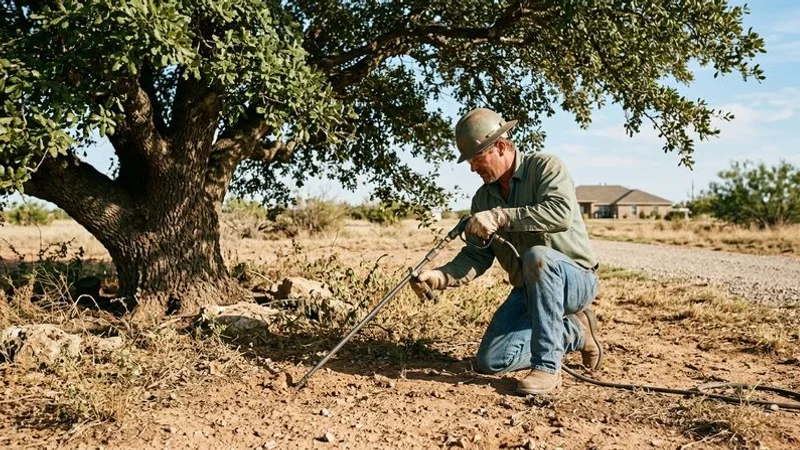
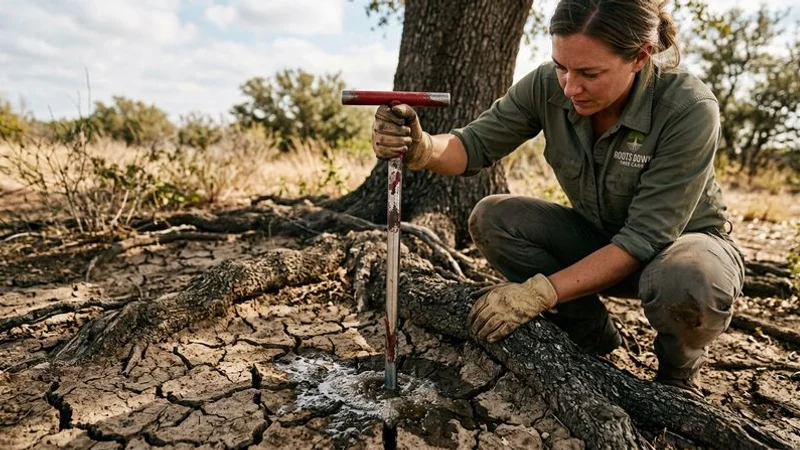
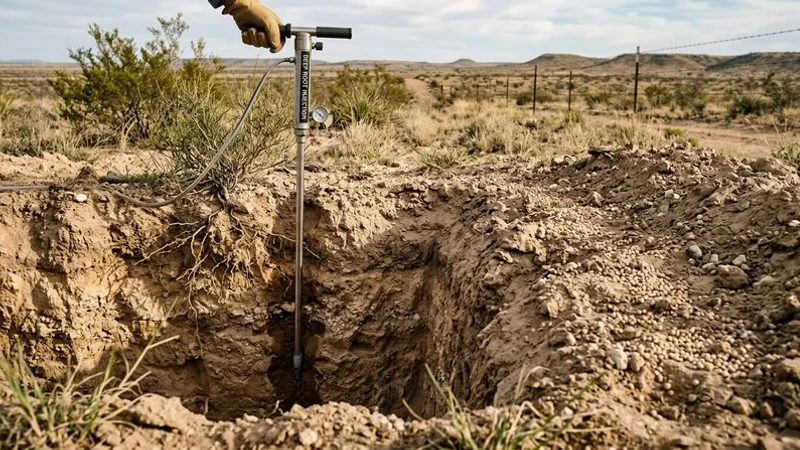
Deep root fertilization is a professional treatment that injects a slow-release liquid nutrient blend directly into the soil. We use high-pressure equipment to drive a specialized probe 8 to 14 inches below the surface. This exact placement delivers essential minerals straight to the active feeder roots, bypassing the competitive root zones of Bermuda or St. Augustine turfgrass. Our liquid application completely solves the absorption problems caused by surface granular fertilizers.
Surface products typically sit on top of the soil and feed your lawn instead of your shade trees. We regularly see heavy Angelo Series clay soils block these surface nutrients from ever penetrating the ground. Rain or irrigation water easily washes granular products away into the street. Our high-pressure delivery system physically fractures compacted earth with over 150 PSI of force to improve aeration.
Deep Root Injection vs. Surface Fertilizer
| Feature | Surface Granular Fertilizer | Deep Root Liquid Injection |
|---|---|---|
| Delivery Depth | 0 to 2 inches | 8 to 14 inches |
| Nutrient Absorption | Mostly consumed by grass | Delivered directly to tree feeder roots |
| Runoff Risk | High risk during heavy rain | Zero risk |
| Soil Benefits | None | Fractures compacted clay and improves aeration |
| Long-Term Financial Impact | Wasted money on runoff | Avoids $800 to $1,500 mature tree removal costs |
Why Spring Timing Is Critical
Trees Are Actively Growing
From late February through May, trees in San Angelo enter their most active growth phase. We see them pushing new leaves, extending shoots, and building the canopy that provides crucial summer shade. Nutrient demand peaks during this exact window when soil temperatures climb above 55 degrees Fahrenheit. Our liquid treatments ensure these minerals are taken up immediately by the awakening roots.
The tree uses these raw materials to build stronger cell walls and produce more chlorophyll. Our timing matches the tree’s natural biological clock for maximum effectiveness. A denser canopy shades the trunk and lowers the internal temperature of the wood.
Building Reserves Before Stress
Our proactive approach packs a survival kit for the long summer siege. A tree entering June with a full tank of nutrients maintains critical metabolic functions during severe heat stress. We prepare your landscape to handle the inevitable drought conditions ahead, especially with La Niña patterns expected in late 2026.
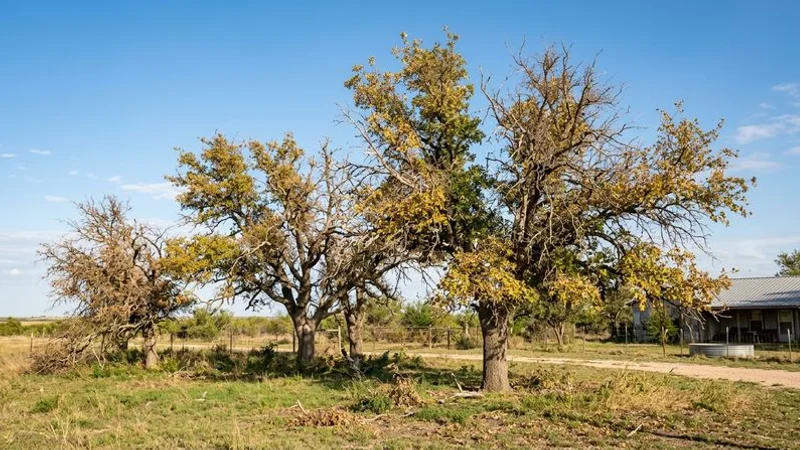
Nutrient-deficient specimens face a much higher risk of permanent decline and attract opportunistic borers that require insect and disease control. Our team often compares this to running a marathon on an empty stomach. The plant might survive the heat, but it will suffer severe canopy dieback.
Soil Temperature and Moisture
Our local monitoring ensures we hit the perfect combination of soil temperature and moisture for nutrient uptake. Texas A&M Forest Service research indicates that adequate spring moisture helps distribute injected fertilizers evenly throughout the entire root zone. We track weather patterns closely to optimize treatment schedules for your yard.
Timely applications mean that by the time July arrives, the plant has already stored these nutrients in its tissues. Our goal is to ensure the roots can focus entirely on pulling water during the hottest days. Spring rainfall creates the ideal carrier for these essential minerals.
West Texas Soil Challenges
High Alkalinity
Our treatments directly address the hostile environment created by native Angelo Series clay loam in Tom Green County. The local soil pH levels regularly rest between 7.5 and 8.5 across San Angelo neighborhoods. We know this extreme alkalinity chemically locks away essential elements like iron and zinc.
Untreated leaves frequently turn pale yellow while the veins stay green due to iron chlorosis. Our specialized liquid formulas feature chelated micronutrients to bypass this chemical barrier entirely. Chelated iron and zinc remain easily accessible regardless of the surrounding pH levels.
Clay Compaction
Our crews see density literally suffocate root systems by cutting off their oxygen supply. Heavy clay soils compact rapidly under regular foot traffic, parked vehicles, and seasonal downpours. We use high-pressure injection wands to blast through this hardened layer with over 150 PSI of force.
The smectite clay common in our region shrinks and swells, forcing roots to grow in shallow, circling patterns. Our annual treatments progressively transform the structure of the soil over time by creating permanent air channels. Better aeration directly translates to a more vigorous and resilient landscape.
Low Organic Matter
Our custom solutions combat the natural organic matter deficit found in Basin and Range region soils. High-quality soil conditioners act like a sponge to retain moisture and support beneficial microorganisms. We include humic acid and mycorrhizal fungi to stimulate this critical biological activity beneath the turf.
These additions dramatically increase the water-holding capacity of the sandy loam and clay around your property. Our goal is to create a living ecosystem that prevents expensive liquid nutrients from simply leaching away. Healthy soil biology is the foundation of long-term landscape survival.
Species-Specific Benefits
Our approach changes based on the exact species growing in your yard. Different tree varieties across San Angelo react to deep root treatments in very distinct ways. We adjust the chemical composition to meet specific metabolic needs.
Pecan Trees
Local pecans act as the most nutrient-hungry plants in the entire Concho Valley. We constantly treat them for severe zinc deficiencies caused by our alkaline dirt. Texas A&M AgriLife confirms that zinc starvation causes a condition called rosetting, where leaves grow tiny and bunched together. Our direct injections of chelated zinc eliminate this issue and restore healthy nut production.
Live Oaks
Sensitive live oak root systems desperately need the soil aeration that comes with high-pressure root feeding. We find that physical fracturing of the clay helps these majestic evergreens maintain their signature dark green foliage. Proper feeding prevents the thinning canopy issues commonly seen in older neighborhoods. Our treatments give them the strength to push through the blistering heat of August.
Red Oaks
Texas red oaks and Shumard oaks struggle intensely with iron chlorosis in Tom Green County. We use chelated iron injections to reverse this yellowing process rapidly. Treated leaves often return to a normal, healthy green within just a few weeks. Our proactive feeding stops chronic iron deficiency from permanently weakening the trunk structure.
Mesquite and Elms
Native mesquites handle poor soil beautifully, but ornamental varieties sometimes need extra help to thrive outside their rugged growing conditions. We recommend occasional deep root feeding if a landscape mesquite shows a thinning canopy or slow growth. Cedar elms also respond exceptionally well to a balanced, professionally applied liquid diet. Our arborists ensure these popular shade providers maintain a thick canopy over your patio.
Why Your West Texas Trees Need Deep Root Fertilization Before Summer
Strict drought preparation remains the most compelling reason for this service. We know that well-nourished plants handle extreme dry spells much better than starving ones. During the erratic weather shifts of 2025, San Angelo saw heavy spring rains followed by sudden, intense dry periods. Our fully fed properties survived those brutal late-summer stretches for several key reasons.
- Stronger root systems: Adequate phosphorus triggers explosive root growth and downward development to access trapped moisture.
- Better water use efficiency: Potassium helps regulate stomata pores, meaning the plant loses less water through daily transpiration.
- More resilient foliage: Nitrogen and trace minerals build thick, waxy leaf tissue that resists heat scorch and relentless wind damage.
- Enhanced recovery: Healthy specimens bounce back immediately once autumn rains finally return.
We rely on these four pillars of health to protect your investment. Proper nutrition essentially weatherproofs the vulnerable organic structures above ground. Our preventative steps cost far less than paying for mature removal services later.
When to Schedule Your Treatment
The absolute best window for treating your yard falls between late February and mid-April. We always try to catch the early spring growth push while winter moisture remains in the dirt. Fall fertilization from late October through November serves as an excellent secondary option to support root expansion. Our team will gladly evaluate your property to pinpoint the safest application date.
Forcing a plant to push new leaves during a summer drought creates a water demand it cannot possibly satisfy. We never recommend pushing nutrients when the plant is already fighting for its life from June through August. Timing the service correctly maximizes the absorption of every applied mineral.
Invest in Your Trees’ Future
We view deep root fertilization as a modest annual investment with massive long-term payouts. The mature shade coverage on your property represents decades of growth and thousands of dollars in real estate value. Our crew knows exactly what it takes to keep a West Texas yard thriving despite the climate. Skipping this step leaves your landscape completely exposed to the harsh elements.
We are ready to help you protect your most valuable landscaping assets. Now is the perfect time to evaluate Why Your West Texas Trees Need Deep Root Fertilization Before Summer hits full force. Our ISA Certified Arborists will test your soil conditions and develop a specific care plan for your unique property. Contact San Angelo Texas Tree Service Pros to schedule a comprehensive evaluation today.
Tags: