Common Tree Diseases in Tom Green County and How to Treat Them
Identify and treat the most common tree diseases affecting trees in Tom Green County and San Angelo. Expert guidance on oak wilt, hypoxylon canker, bacterial leaf scorch, cotton root rot, and powdery mildew.
You know how brutal the summer heat gets here in Tom Green County. Our team at San Angelo Texas Tree Service Pros sees this constant environmental stress acting as the primary trigger for almost every major infection in the Concho Valley. That combination of alkaline soils and high temperatures pushes landscape trees to their absolute limits.
Recognizing the early warning signs through professional insect and disease control makes the difference between saving a century-old oak and paying thousands for a costly removal. This guide will break down the Common Tree Diseases in Tom Green County and How to Treat Them.
We will share the exact diagnostic steps, local spread data, and treatment costs used in the field right now. Let’s look at the hard facts and explore the best practical ways to respond to these local threats.
Oak Wilt
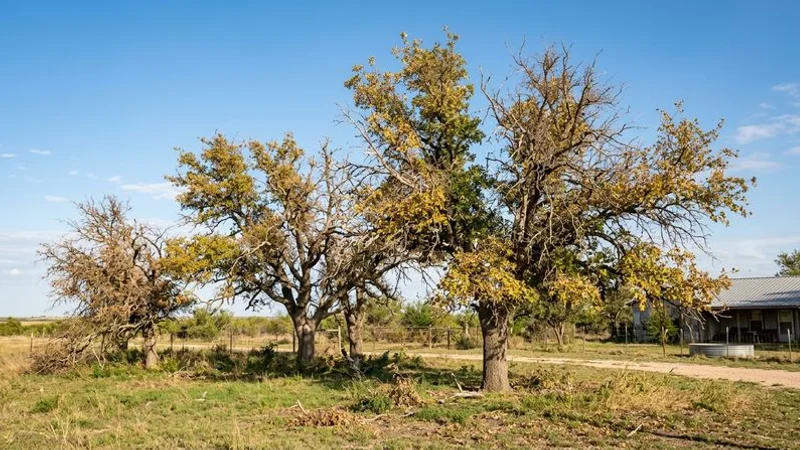
Oak wilt remains the most feared tree disease in Texas for a very good reason. Caused by the aggressive fungus Bretziella fagacearum, this pathogen directly attacks the vascular system of oak trees. This infection quickly blocks water transport and kills healthy trees in a matter of weeks.
Texas A&M Forest Service statistics for 2026 confirm that this devastating fungal disease has actively spread to 76 counties. We track this pathogen closely because it is currently killing oaks in Central and West Texas at epidemic proportions. The fungus moves efficiently through interconnected root systems underground.
Symptoms
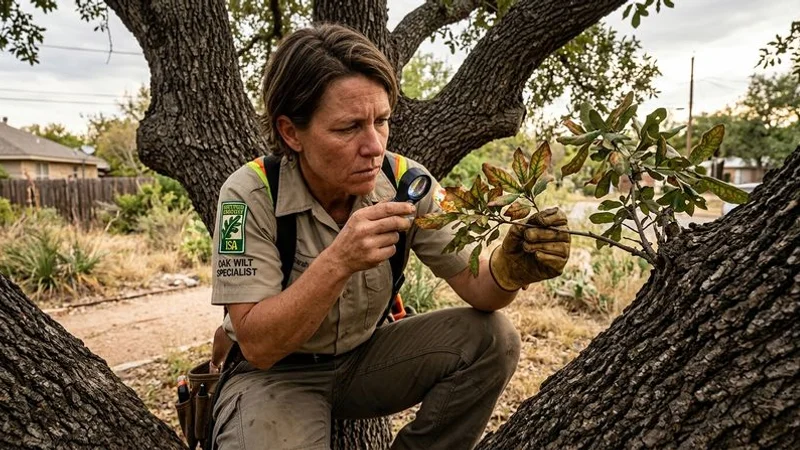
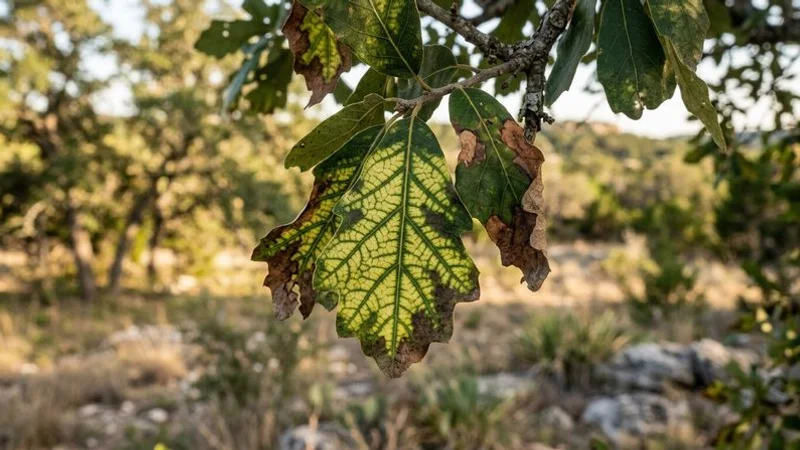
In live oaks, look for veinal necrosis. This distinctive pattern appears when leaf tissue along the veins turns brown while tissue between the veins stays green. Affected trees drop their leaves prematurely, and the canopy thins out progressively.
In red oaks like the Texas red oak and Shumard oak, leaves develop a water-soaked appearance. The foliage wilts and turns brown from the outer margins inward. Red oaks completely succumb to the disease within four to eight weeks of the first symptom onset.
How It Spreads
Oak wilt moves primarily through root grafts between nearby oaks. Sap-feeding nitidulid beetles also carry fungal spores from infected trees directly to fresh wounds on healthy trees. The highest risk period for beetle transmission in San Angelo runs from February through June.
Recent field data shows the fungus travels underground through live oak roots at an average rate of 75 feet per year. Our trenching protocols are specifically designed to halt this rapid subterranean expansion. The tiny sap-feeding beetles pick up sticky spores from fungal mats on dying red oaks and fly them right to fresh pruning cuts.
Treatment Protocol
For high-value live oaks, trunk injection with propiconazole, sold commercially as Alamo fungicide, can successfully suppress the disease if caught early. This treatment works best when less than 30 percent of the canopy shows visible damage. Preventive injections for healthy live oaks situated near known infection centers provide excellent protection.
The cost of Alamo fungicide injections typically runs about $10 per inch of trunk diameter. This means treating a healthy 15-inch oak will cost roughly $150. We find this investment is just a fraction of the thousands of dollars required to remove and replace a massive dead shade tree.
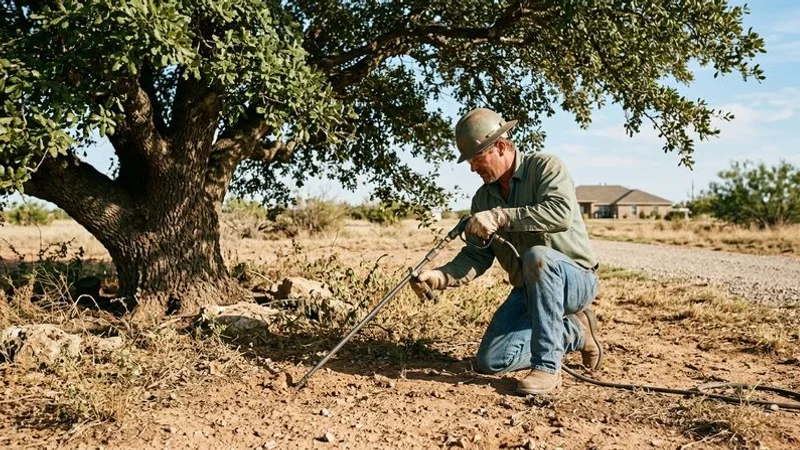
For groups of live oaks, trenching remains the standard defense. Digging a trench to a depth of 4 to 5 feet around the infection center physically severs shared root grafts.
Red oaks have no effective treatment option once symptoms appear. Property owners must schedule professional tree removal for infected red oaks immediately. Proper disposal of the wood prevents fungal mat formation that would otherwise spread spores to neighboring properties.
Essential Prevention Steps:
- Never prune oaks from February through June.
- Seal all oak wounds immediately with commercial tree wound paint regardless of the season.
- Monitor neighboring properties for sudden, unexplained canopy thinning.
Hypoxylon Canker
Hypoxylon canker stands out as a highly visible indicator of severe environmental stress in San Angelo. The fungus Biscogniauxia atropunctata lives harmlessly as a latent colonizer in the sapwood of virtually every hardwood tree in the Concho Valley. The trouble begins when a tree experiences a significant drop in its natural defenses.
We frequently diagnose this opportunistic infection in the seasons following extreme heat waves.
Symptoms
The first visible sign is often the sloughing of bark in large patches on the trunk and major limbs. Beneath the lost bark, you will spot a layer of fungal stroma. This crust-like coating initially appears tan or olive-colored before turning dark brown to black.
The stroma feels dusty and powdery when rubbed with a finger. Severe crown dieback closely accompanies the bark loss, causing branches to die back from the tips inward.
An excellent insider tip for homeowners is to watch for water sprouts growing rapidly along the main trunk. These random, leafy shoots are a desperate attempt by the tree to produce foliage before the bark begins to fall off. Our arborists view these specific shoots as a critical early warning sign of impending vascular failure.
How It Develops
Hypoxylon does not aggressively attack healthy trees. This opportunistic fungus simply exploits trees that are already in a state of serious decline.
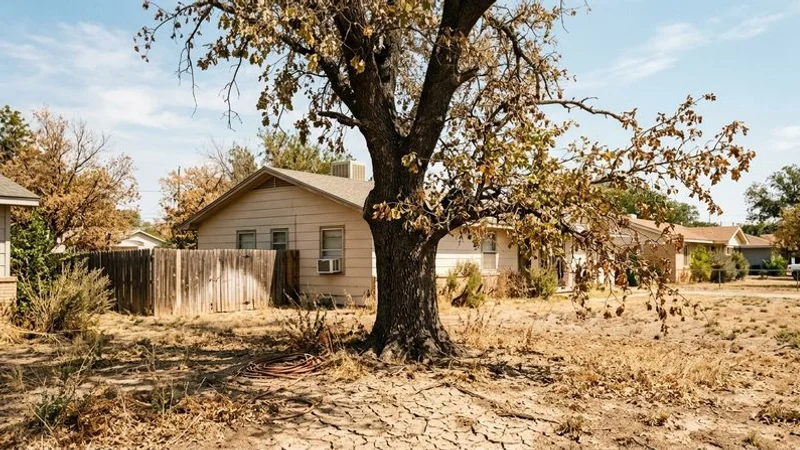
Healthy trees maintain a normal internal moisture content between 120 and 160 percent. This high moisture level makes it nearly impossible for the fungus to activate and spread. The severe 2023 Texas drought heavily compromised root systems across the region, which directly caused a delayed spike of Hypoxylon cases throughout 2025 and 2026. We always remind clients that consistent deep watering during dry spells serves as the only true defense against this secondary killer.
Construction damage that severs major roots acts as another frequent catalyst for infection.
Treatment Protocol
There is no known fungicide treatment that cures hypoxylon canker. Once the dark fungal stroma becomes visible on the trunk, the tree’s vascular system has already failed. Death typically follows within one to two growing seasons.
If you catch the infection when less than 15 percent of the outer canopy is affected, targeted branch removal might temporarily stall the spread. Black fungal mats appearing on the main trunk require a different approach entirely. Our safety protocols dictate removing these hazard trees quickly before the brittle, decaying wood collapses onto your home or driveway.
Practical Prevention Methods:
- Provide adequate, deep watering during extended drought periods.
- Strictly avoid soil compaction and root damage during any home construction or landscaping projects.
- Apply a three-inch layer of organic mulch over the root zone to conserve soil moisture.
- Maintain overall tree health through scheduled deep root fertilization.
Bacterial Leaf Scorch
Bacterial leaf scorch is caused by the bacterium Xylella fastidiosa. This is the exact same organism responsible for causing Pierce’s disease in Texas vineyards. The bacteria affect a wide range of hardwood trees in Tom Green County, with oaks, elms, and sycamores taking the hardest hit.
The Lipan Creek area of Tom Green County has also recorded numerous cases of Pecan Bacterial Leaf Scorch in local orchards. We monitor this specific bacterial strain closely because it silently drains the annual yield and vitality from heritage pecan trees.
Symptoms
This infection causes a characteristic marginal leaf scorch. The browning begins at the outer leaf edges and slowly progresses inward toward the stem. A key diagnostic feature is a distinct yellow or reddish-brown band separating the dead brown tissue from the healthy green tissue.
This specific color transition zone, known as a halo, clearly distinguishes bacterial scorch from standard summer drought stress.
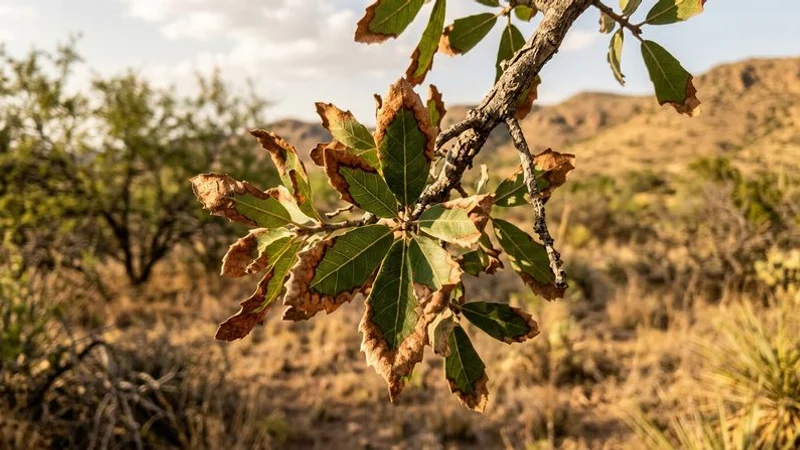
Symptoms usually appear first in mid to late summer. This timing makes perfect sense because the bacteria multiply most rapidly inside the tree during periods of hot weather. The scorch pattern typically starts in one section of the canopy and gradually spreads to the rest of the tree over multiple growing seasons. Affected trees leaf out normally each spring, but the scorch inevitably returns earlier and more extensively each consecutive year.
How It Spreads
Xylella fastidiosa relies on xylem-feeding insects for transmission. Leafhoppers and spittlebugs, including the glassy-winged sharpshooter, serve as the primary vectors in Texas. These insects feed on infected trees, pick up the bacteria, and inject them straight into healthy trees during their next meal.
Once deposited inside the tree, the bacteria multiply inside the xylem vessels. This bacterial buildup gradually clogs the plumbing, completely blocking vital water transport to the upper canopy.
Treatment Protocol
There is currently no complete cure for bacterial leaf scorch. Trunk injection with the antibiotic oxytetracycline can suppress symptoms for one to two growing seasons. This treatment must be repeated annually to remain effective and will not permanently eliminate the bacterial infection.
The most common commercial treatment used by professionals is Arbor-OTC. This shelf-stable, water-soluble antibiotic powder delivers measurable results. A standard one-ounce container of this oxytetracycline formula effectively treats up to ten trees measuring 10 inches in diameter. We recommend these ongoing annual injections specifically for high-value centerpiece landscape trees due to the recurring maintenance costs.
Supporting general tree health through proper watering, mulching, and fertilization significantly slows the progression of the decline. Trees with advanced scorch symptoms should be safely removed and replaced with resistant native species.
Cotton Root Rot
Cotton root rot ranks as one of the most destructive soilborne plant diseases in the southwestern United States. The aggressive fungus Phymatotrichopsis omnivora thrives in the alkaline, calcareous soils that dominate Tom Green County. This pathogen effortlessly kills a staggering range of broadleaf plants and agricultural crops.
This specific pathogen is responsible for destroying up to 25 percent of the harvest in some Texas cotton-producing areas. The disease proves equally lethal to residential landscape plants. We consider it the stealthiest killer in the Concho Valley because the fungus survives deep underground in a dormant state for decades.
Symptoms
Cotton root rot strikes suddenly and dramatically during the hottest months of the year. A tree that appears perfectly healthy one week can be completely dead the next.
The fungus relentlessly attacks the root system out of sight. By the time aboveground symptoms finally appear, the structural root damage is already catastrophic. Leaves wilt rapidly, often remaining green as they droop downward. The foliage then turns brown and stays rigidly attached to the branches rather than dropping to the ground.
The entire tree can go from a full, lush canopy to completely dead in a matter of days during a hot summer week. If you carefully pull back the soil at the base of an affected tree, you might find white to tan fungal strands clinging to the root surfaces. The roots themselves will be visibly decayed, featuring outer bark that slips easily off the inner root wood.
Susceptible and Resistant Species
In the San Angelo area, careful plant selection remains the ultimate defense against this invisible soilborne killer.
| Plant Vulnerability | Common San Angelo Tree Species |
|---|---|
| Highly Susceptible | Pecans, Live Oaks, Mulberries, Cottonwoods, Fruit Trees |
| Naturally Resistant | Desert Willow, Texas Mountain Laurel, Afghan Pine, Mesquite |
Treatment Protocol
Cotton root rot has historically proven extremely difficult to treat or eradicate. The fungus easily survives in the soil for years as dormant sclerotia, simply waiting for susceptible roots to grow nearby.
The most promising treatment advance in recent years involves the precise soil application of Trichoderma. This biological control agent works best when combined with deep incorporation of organic matter right into the root zone. Texas A&M researchers have heavily documented that specific strains like Trichoderma virens actively parasitize and suppress the deadly root rot pathogen. We utilize this biological approach alongside heavy organic compost to lower the local soil pH and create a highly hostile environment for the disease.
For high-value trees located near historic infection zones, preventive soil amendments offer the best proactive defense. Flutriafol fungicide, sold commercially as Topguard Terra, has also shown excellent efficacy when applied as a prescribed soil drench in recent Texas A&M AgriLife Extension field trials.
Powdery Mildew
Powdery mildew easily takes the title as the most visually recognizable tree disease in Tom Green County. Multiple fungal species cause powdery mildew on different host trees. The physical symptoms remain incredibly similar across all affected plant species.
Symptoms
A white to grayish powdery coating develops rapidly on leaf surfaces. This fungal growth typically starts on the upper sides of the leaves before spreading. The coating consists of actively growing fungal mycelium and spores, giving the foliage a distinctive floury or talcum powder appearance.
Severely infected leaves frequently curl, distort, or drop prematurely to the ground. Young leaves and fresh spring growth remain the most highly susceptible to this aesthetic damage.
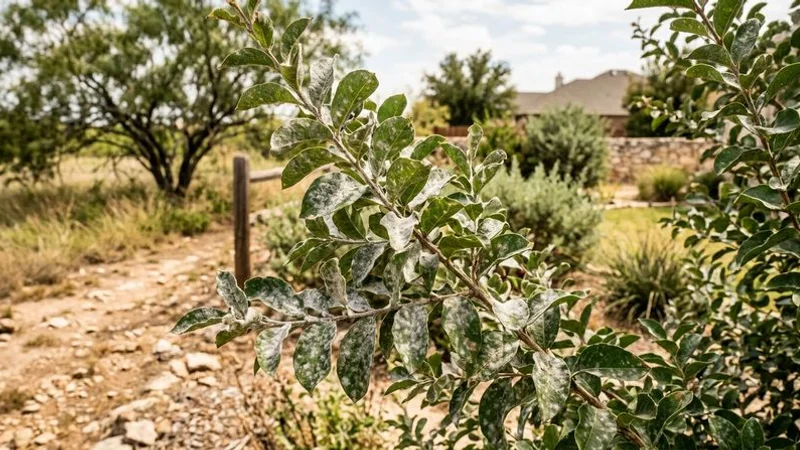
In San Angelo, the powdery white coating appears most frequently on crepe myrtles, spring live oaks, and ornamental pecans. The disease remains highly active during periods of moderate temperatures paired with high humidity, particularly in the spring and fall. We find that unlike most other fungal issues, this specific mildew spreads incredibly fast during dry weather, provided the ambient relative humidity stays elevated.
Treatment Protocol
Powdery mildew is rarely fatal to established landscape trees. Severe infections, however, actively weaken branches, reduce seasonal growth, and cause unsightly premature leaf drop. Treatment options include the following proven methods.
- Fungicide sprays: Products containing myclobutanil, like Spectracide Immunox, are highly effective when applied at the first sign of a white dusting. Thorough coverage of all affected leaves is absolutely necessary for control. For large mature trees, professional high-pressure spray equipment is required to reach the upper canopy.
- Cultural practices: Improve natural air circulation around affected trees by selectively thinning the dense inner canopy. Avoid using overhead irrigation systems that drastically increase humidity right around the foliage. Remove and immediately dispose of heavily infected leaves that drop to the ground.
- Resistant varieties: When planting new landscape trees, always choose powdery mildew-resistant cultivars. For crepe myrtles, many excellent resistant varieties are readily available at local nurseries.
- Color choices: The ‘Natchez’ cultivar provides brilliant white blooms and stellar disease resistance. The ‘Tuscarora’ variety offers vibrant coral pink flowers without the mildew headaches.
- Space-saving options: If you need a more compact tree for a small yard, the ‘Acoma’ variety maxes out at 10 feet tall. Our landscaping teams highly recommend planting these specific cultivars to completely avoid future fungicide costs.
Identifying Common Tree Diseases in Tom Green County and How to Treat Them
Many tree diseases share incredibly similar physical symptoms. Misdiagnosis often leads to ineffective treatments or wasted money. If you notice any of the following warning signs on your property, contact a certified professional for a thorough site evaluation.
- Unexplained leaf browning, wilting, or premature leaf drop
- Bark falling off the trunk or major limbs
- Fungal growth on the trunk, branches, or at the base of the tree
- Rapid decline of a previously healthy tree
- Multiple trees showing similar symptoms in the exact same area
Early detection gives your valuable shade trees the absolute best chance of long-term survival. Many of the infections described here remain highly manageable when caught early but turn fatal if ignored.
Contact San Angelo Texas Tree Service Pros for expert tree disease diagnosis and treatment anywhere in Tom Green County and the Concho Valley. Our ISA Certified Arborist has the exact training and field experience to accurately identify what is hurting your trees. A customized treatment plan ensures you can successfully manage Common Tree Diseases in Tom Green County and How to Treat Them before it is too late.
Tags: